

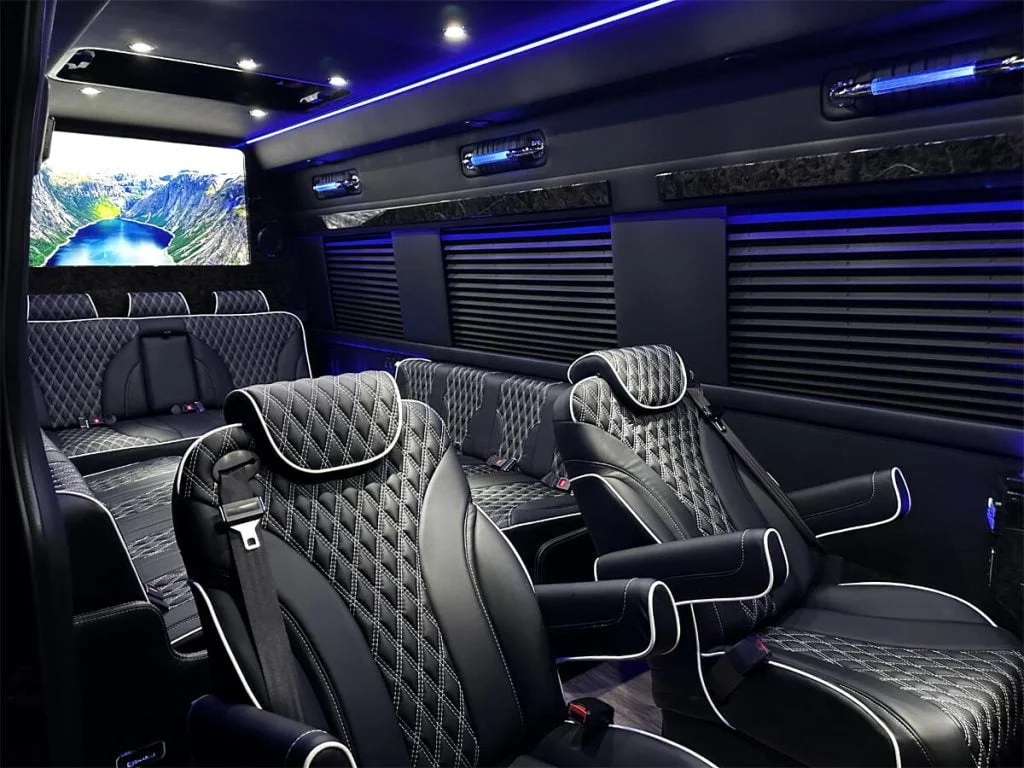
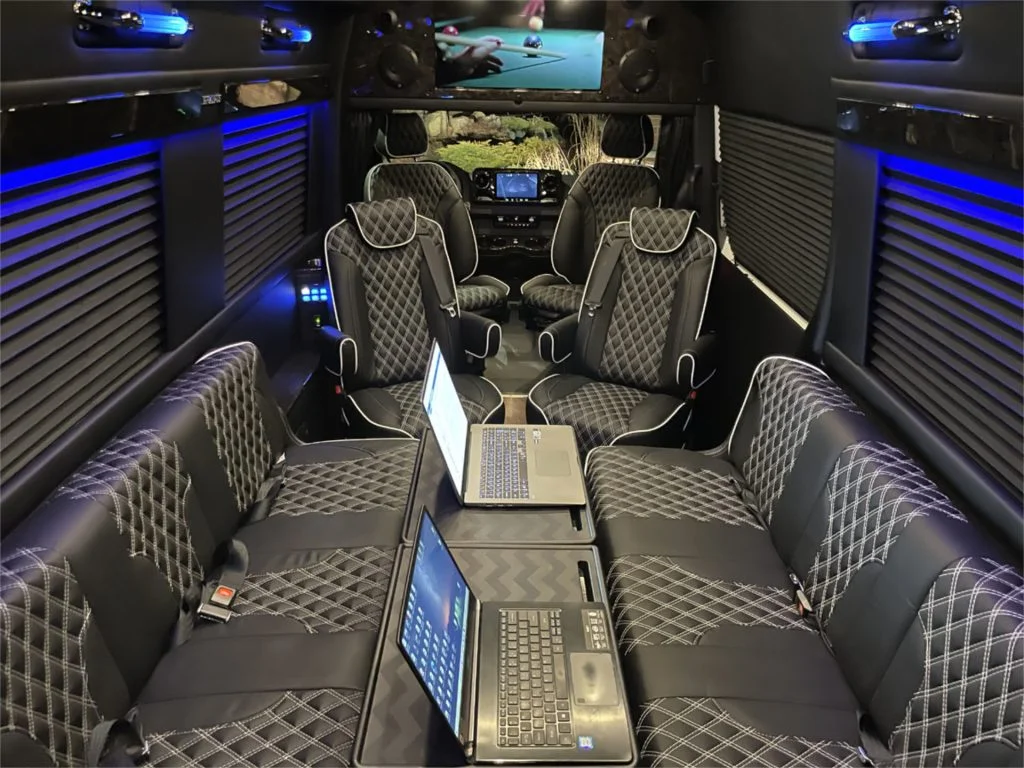
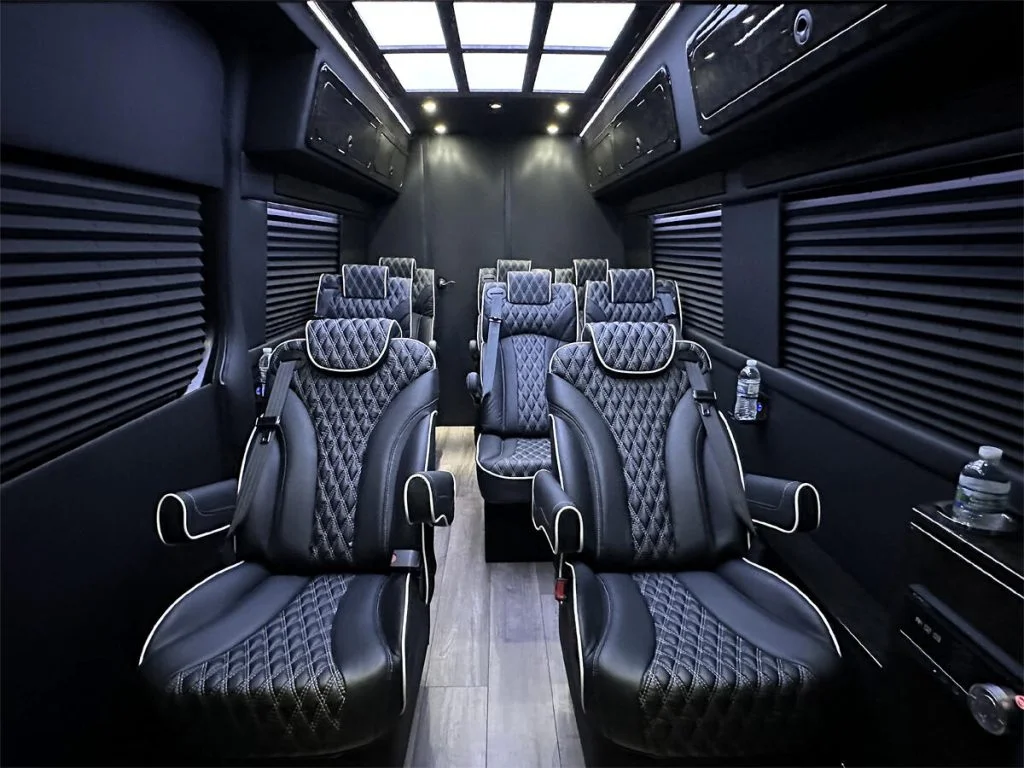
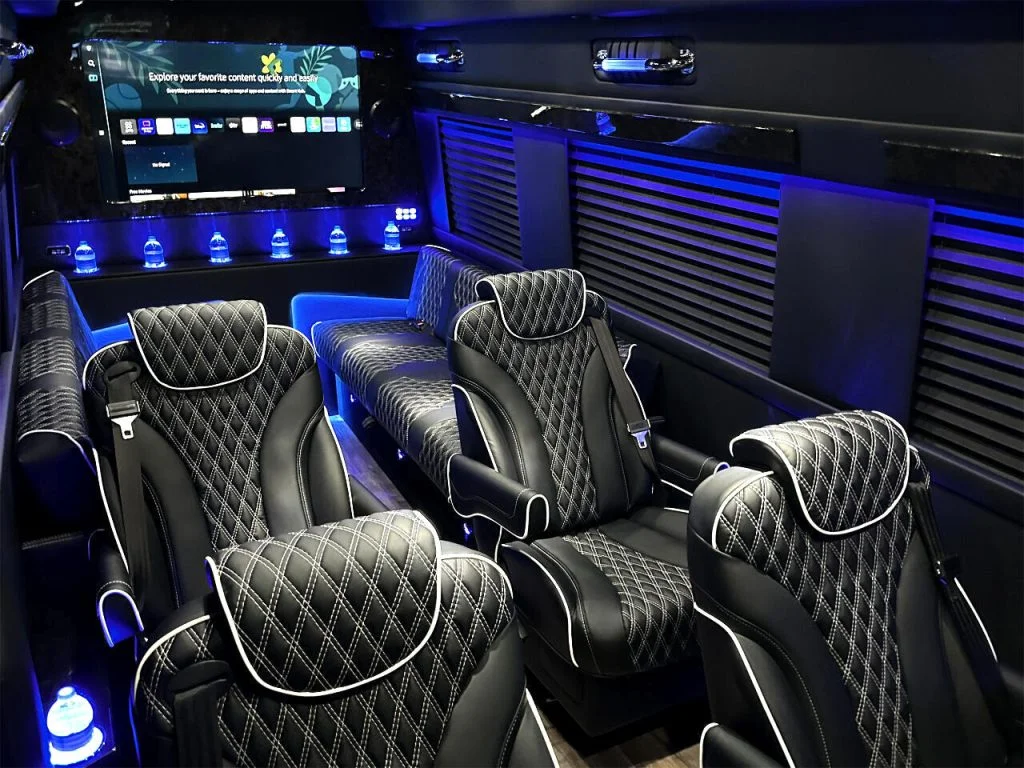
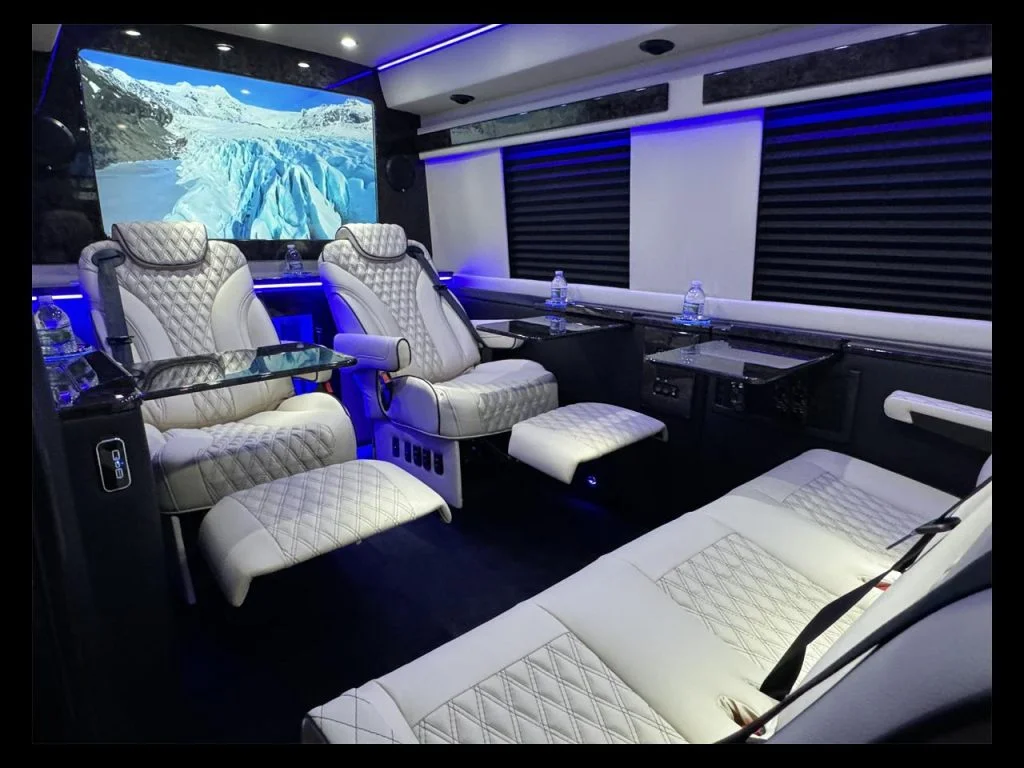
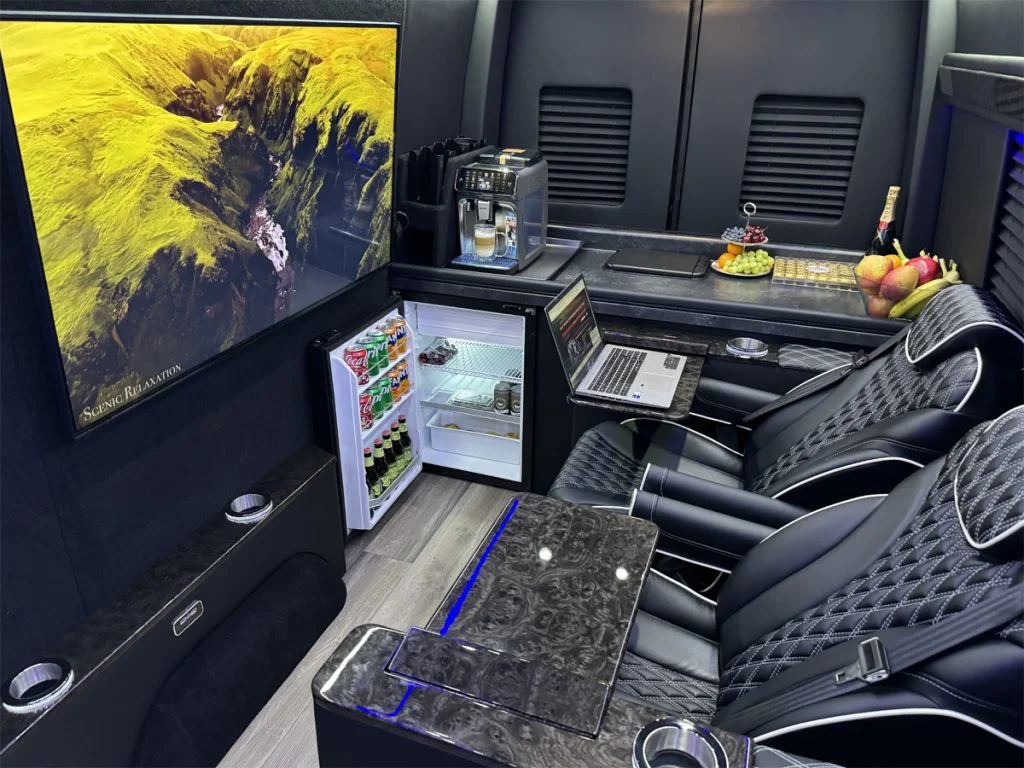
The world of luxury Sprinter vans and custom conversions comes with its own vocabulary. Whether you are comparing wheelbases, weighing a wet bath against a removable bathroom, or asking your accountant about Section 179, this glossary explains the terms you will encounter while shopping for a conversion van. Bookmark it, and when you are ready to see these ideas in the metal, browse our inventory or talk to our team.
- Vans & Chassis
- Conversion & Coachbuilding
- Interior & Comfort
- Power & Off-Grid Systems
- Driving, Safety & Performance
- Buying, Ownership & Business Use
Vans & Chassis
- Sprinter Van
- Mercedes-Benz's full-size van platform, prized by coachbuilders for its turbo-diesel drivetrain, high-roof options, and refined road manners. It is the foundation for most of the luxury conversions Auto Elite builds.
- Wheelbase (144 vs. 170)
- The distance in inches between the front and rear axles. The Sprinter comes in 144-inch and 170-inch wheelbases; the 144 is easier to park, the 170 offers far more interior room. See our guide to choosing the right wheelbase.
- 170 Extended (170 EXT)
- The longest Sprinter configuration, adding roughly a foot of body length behind the 170-inch wheelbase. Maximum floor space for full bathrooms, garages, and multi-zone lounges.
- High Roof
- A factory roof option giving most adults full standing height inside the van, generally about 6 feet 4 inches of interior clearance. Nearly all luxury conversions start with a high-roof chassis.
- Cargo Van
- A Sprinter delivered as an empty steel shell with no rear windows or seating. The blank canvas most custom conversions begin from.
- Crew Van
- A factory configuration with one row of rear seating plus cargo space behind, a middle ground between cargo and passenger vans.
- Passenger Van
- A Sprinter factory-built with full seating and windows. Executive upfitters often replace factory seats with captain's chairs and custom interiors.
- Ford Transit
- Ford's full-size van platform, available with AWD and an EcoBoost gas engine. A popular Sprinter alternative; Auto Elite offers Ford Transit conversions.
- Ram ProMaster
- Stellantis's front-wheel-drive full-size van, known for its wide, squared cargo box and lower load floor. Auto Elite builds Ram ProMaster conversions as well.
- Class B RV (Camper Van)
- The RV industry's designation for a motorhome built within a van body, like a converted Sprinter. Easier to drive and park than larger Class A or C motorhomes while still offering sleeping, cooking, and bath facilities.
- Class B+
- A motorhome slightly larger than a Class B, typically built on a cutaway van chassis with a widened body. Sits between a camper van and a Class C in size.
- GVWR
- Gross Vehicle Weight Rating: the maximum the van can legally weigh fully loaded, including passengers, gear, and fluids. Vans over 6,000 pounds GVWR may qualify for accelerated business tax deductions - see our tax savings page.
- Payload
- How much weight the van can carry: GVWR minus the vehicle's empty (curb) weight. Conversions consume payload, so quality builders weigh and balance every build.
- Curb Weight
- The weight of the finished vehicle with all fluids but no passengers or cargo.
- Dually (DRW)
- Dual rear wheels. Found on heavier-duty Sprinter 3500/4500 chassis, increasing payload capacity and stability for large or heavily equipped builds.
- AWD / 4x4
- All-wheel-drive and four-wheel-drive systems that send power to all four wheels for confidence in snow, sand, and gravel. Late-model Sprinters use an automatic AWD system; earlier vans offered a selectable 4x4.
- MBUX
- The Mercedes-Benz User Experience infotainment system: touchscreen navigation, voice control, and smartphone integration found in current Sprinter cockpits.
Conversion & Coachbuilding
- Conversion Van
- A van professionally transformed after leaving the factory - new seating, cabinetry, power, climate, and entertainment systems - to serve as a luxury cruiser, executive office, camper, or shuttle.
- Upfitter
- A company that modifies factory vehicles with new equipment and interiors. Often used interchangeably with coachbuilder, though upfitting can be as simple as shelving and as elaborate as a full luxury coach.
- Coachbuilder
- A manufacturer that hand-crafts complete custom vehicle interiors and bodywork, the tradition Auto Elite works in at its Elkhart, Indiana factory.
- Second-Stage Manufacturer
- The legal term for a company that completes or alters a vehicle after the original manufacturer, taking responsibility for the added systems' compliance with federal safety standards.
- Floor Plan (Layout)
- The arrangement of seating, galley, bath, bed, and storage along the van's length. The single most important decision in a custom build, set early in the design process.
- Spec Build
- A van built to a proven specification and offered for sale ready to drive, the fastest way into a luxury conversion. Browse current spec builds in our inventory.
- Custom Build
- A van designed around one buyer: layout, materials, power, and technology selected to order. Start one with Build Your Vehicle.
- Build Sheet
- The documented specification of everything in a conversion - chassis options, systems, finishes, and serial-numbered components. Important for service, insurance, and resale.
- RVIA Certification
- A seal from the RV Industry Association indicating a motorhome was built to the ANSI/NFPA 1192 standard for plumbing, propane, and electrical systems.
- FMVSS
- Federal Motor Vehicle Safety Standards. Reputable conversion companies use seating and restraints engineered and tested to these standards - a key difference between professional builds and DIY interiors.
- CNC Cabinetry
- Cabinet components cut by computer-controlled machinery for repeatable, furniture-grade precision, then hand-finished and fitted to the van's curves.
- Marine-Grade Materials
- Plywoods, fabrics, and hardware engineered to resist moisture, vibration, and UV exposure, borrowed from yacht building and standard in quality van conversions.
- Sound Deadening
- Butyl or composite damping layers applied to the van's steel panels to cut road noise and resonance before insulation and paneling go in.
- Insulation
- Thermal and acoustic material - commonly Thinsulate, wool, or closed-cell foam - installed within the van's walls, floor, and ceiling for year-round comfort.
- Headliner
- The finished ceiling surface of the van. In luxury builds, often upholstered suede or leather-look material, sometimes with fiber-optic starlight lighting.
- Valance
- A trim panel that conceals window shade tracks, lighting strips, or curtain hardware where walls meet the ceiling.
- Partition Wall
- A dividing wall inside the van, used to separate a driver's cab from a lounge, create a private rear suite, or enclose a bathroom.
- Roof Rack & Ladder
- Exterior systems for carrying gear, awnings, and solar panels, engineered for the high-roof van's height and wind loads.
Interior & Comfort
- Captain's Chairs
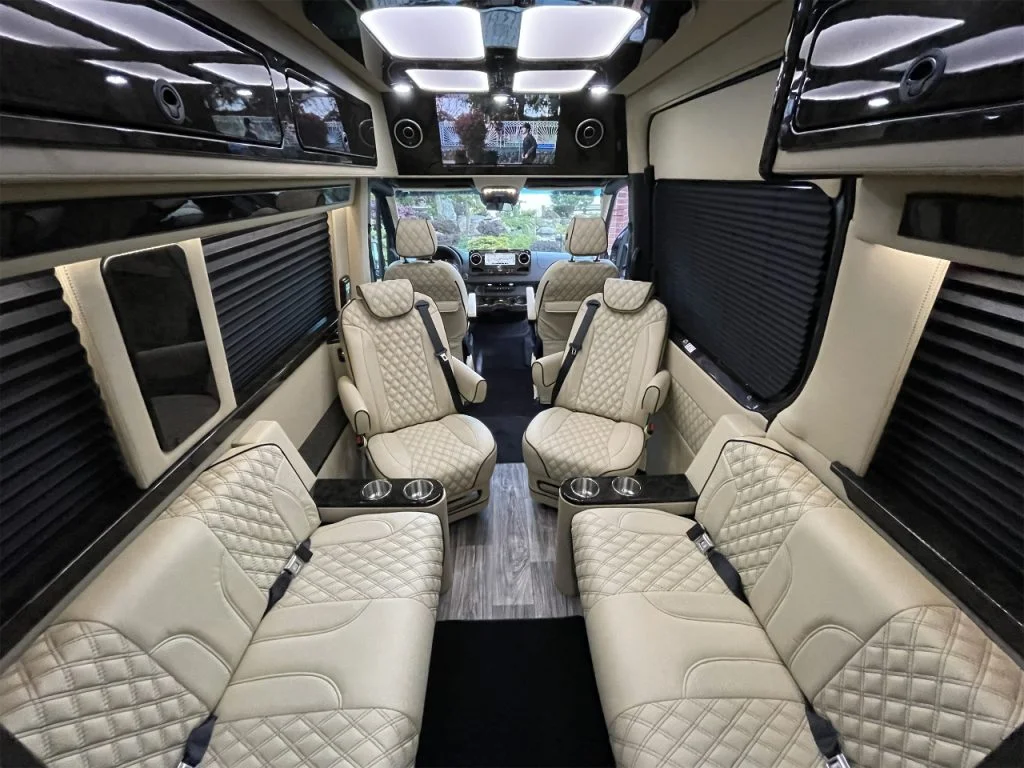
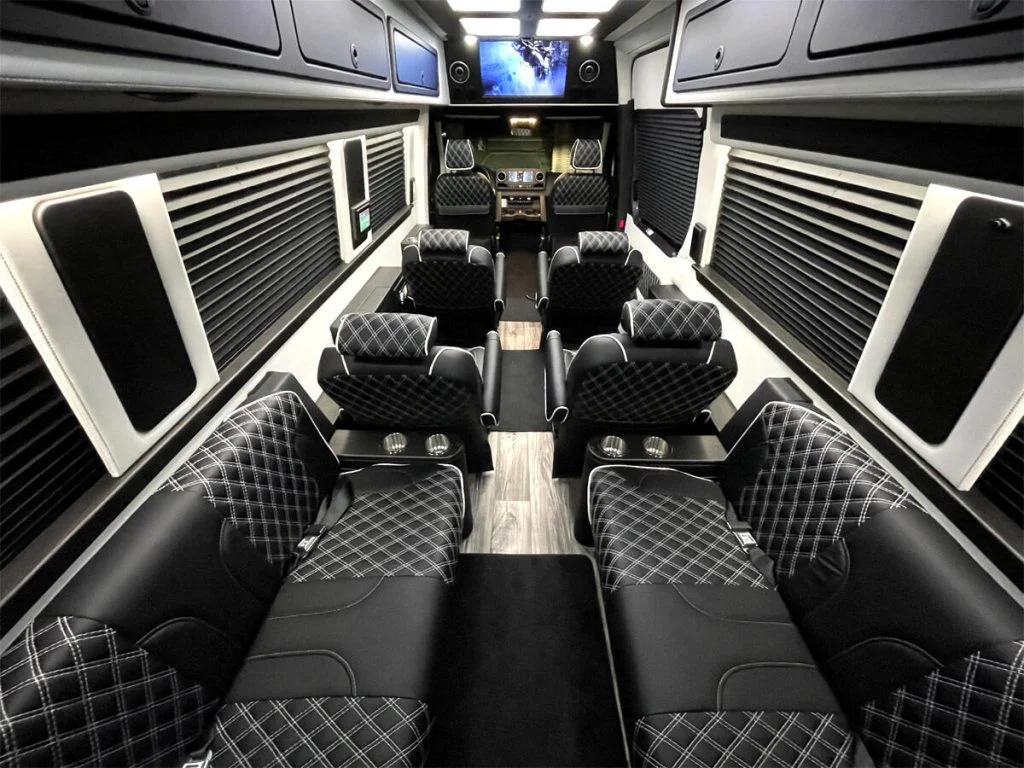
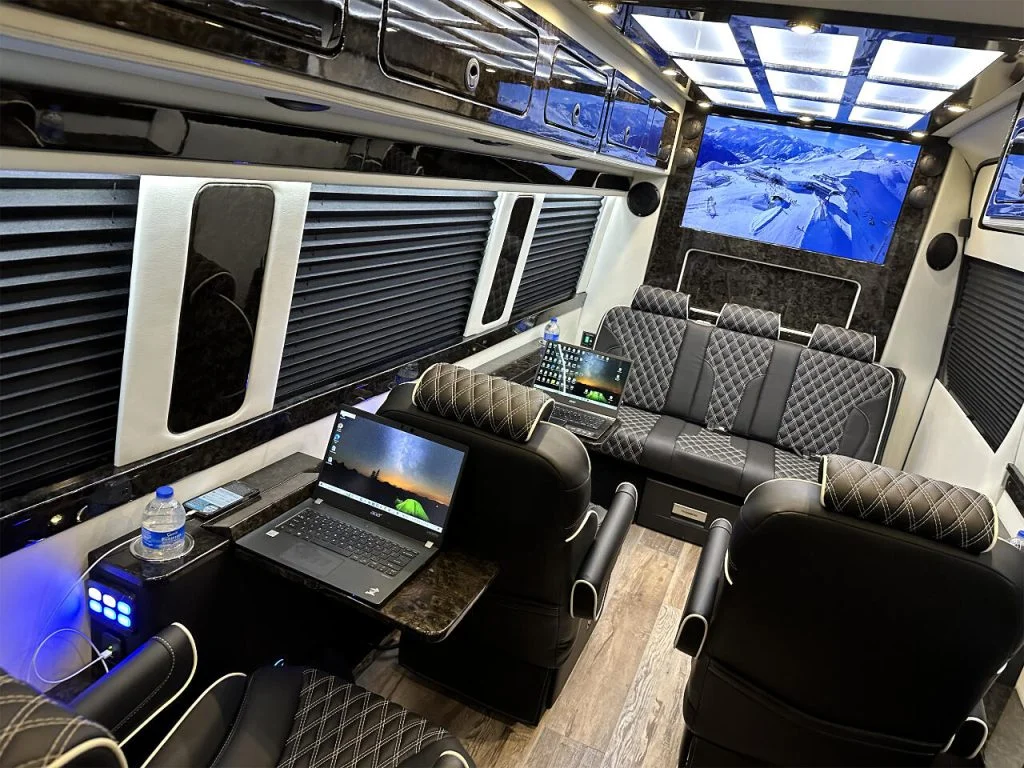
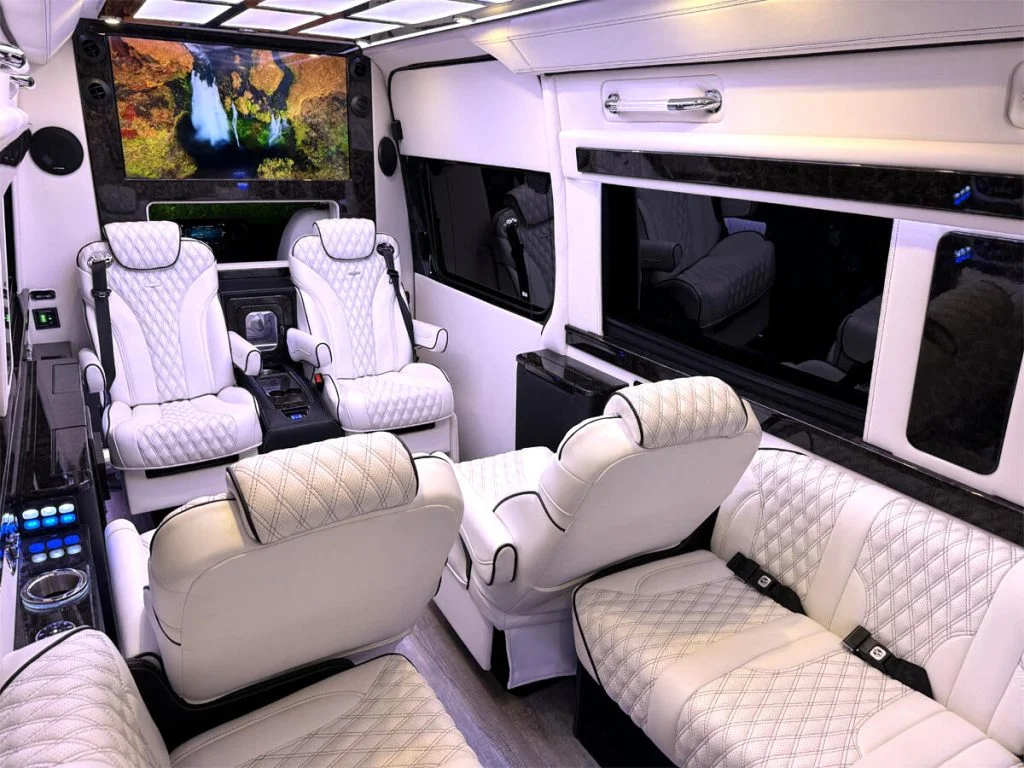
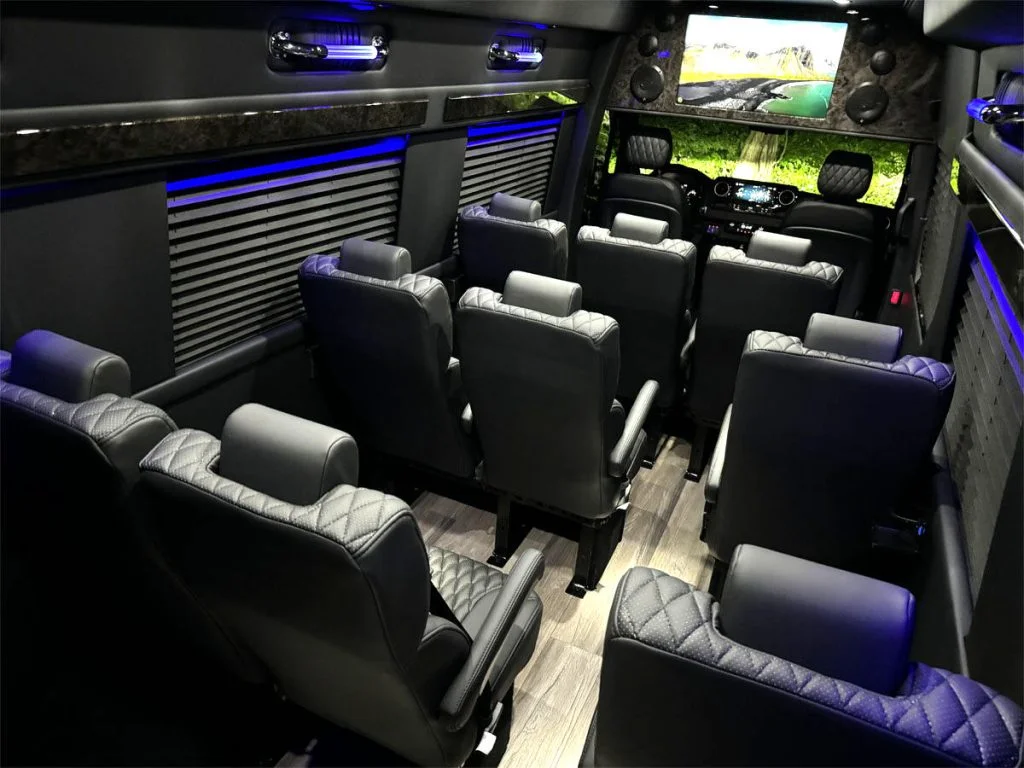
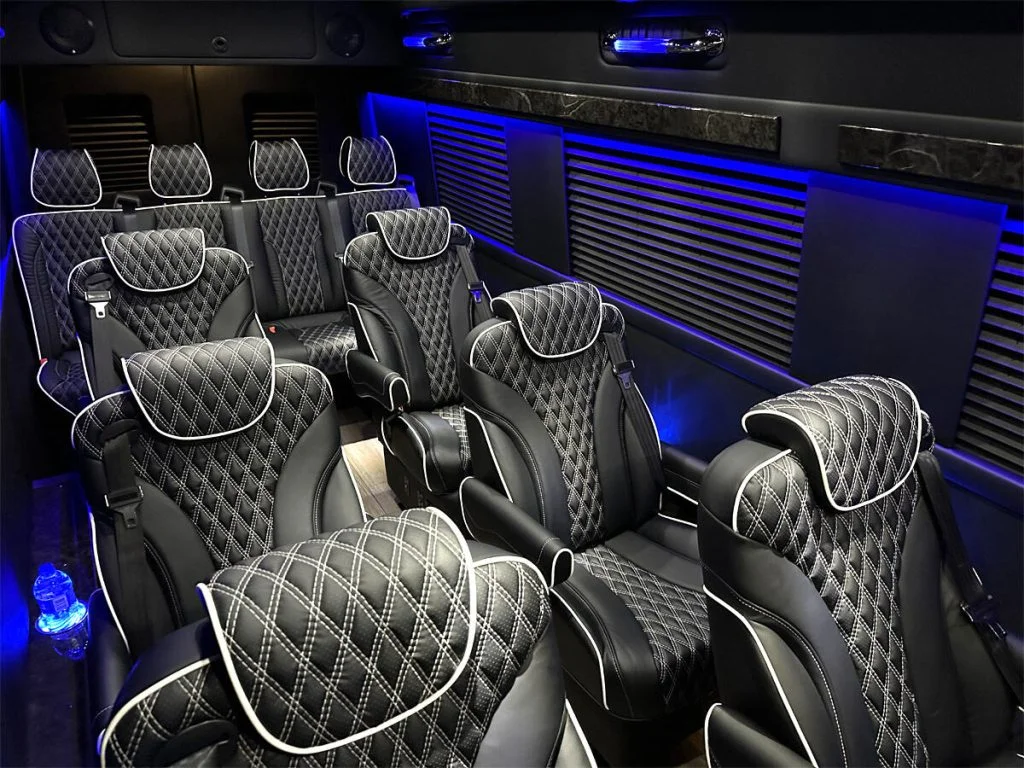
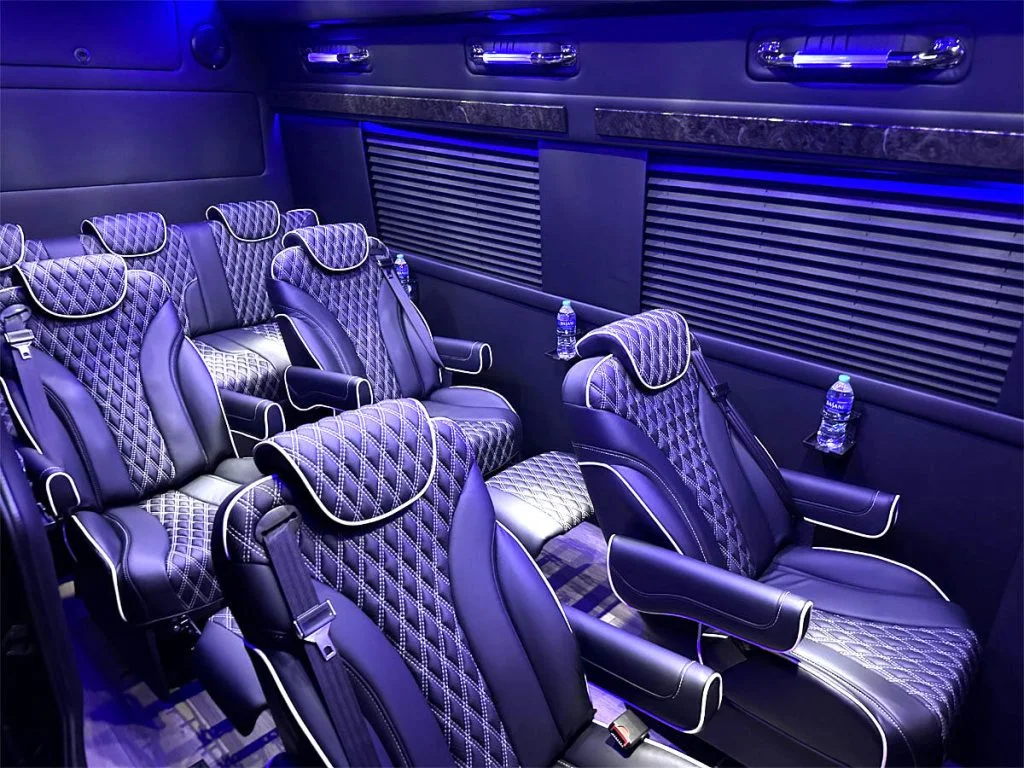
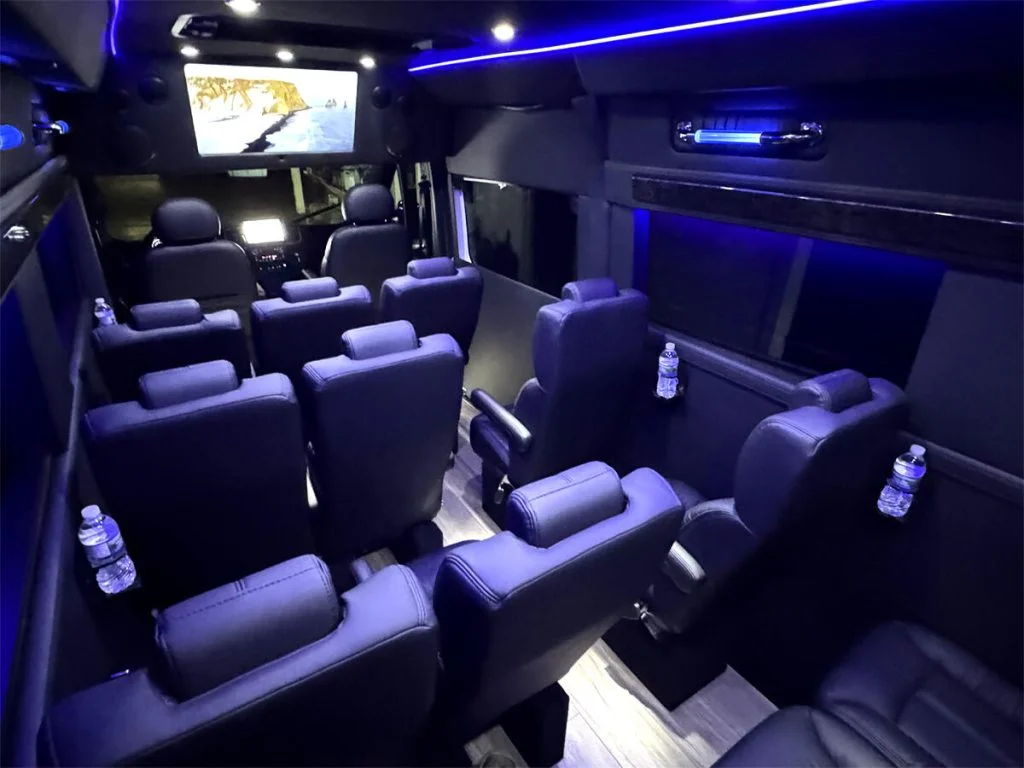
- Individual armchair-style seats, often heated, ventilated, powered, and reclining in luxury builds. The signature seating of executive Sprinters.
- Swivel Seats
- Cab seats mounted on rotating bases so the driver and passenger chairs turn to face the living or meeting space when parked.
- Pullman-Style Seating
- Facing rows of seats, train-compartment style, that convert between conference seating and lounge or sleeping configurations - as in the Auto Elite Elite Pullman.
- Sofa Bed / Convertible Lounge
- A rear bench engineered to fold flat into a bed, frequently power-actuated in luxury conversions.
- Murphy Bed
- A bed that folds up against the wall or cabinetry when not in use, freeing daytime floor space.
- Galley
- The van's kitchen area: countertop, sink, refrigeration, and cooking surface, often an induction cooktop in modern all-electric builds.
- Wet Bath
- A sealed bathroom where the shower shares the space with the toilet and sink, the most space-efficient way to get a full bath into a van.
- Dry Bath
- A bathroom with a separate, enclosed shower stall, found in larger 170 and 170 EXT floor plans.
- Removable Bathroom
- A self-contained bathroom module that can be taken out of the van to free up cargo or seating space, a hallmark of Auto Elite models like the Road Jet and Elite Cruiser.
- Cassette Toilet
- A toilet with a removable waste tank that can be emptied at a dump station or household toilet, avoiding the need for permanent black-tank plumbing.
- Garage
- Van-speak for the rear cargo area beneath or behind the bed, sized for bikes, golf bags, skis, or luggage. The Road Liner 737 is built around a massive one.
- Blackout Shades
- Light-sealing window coverings, often magnetic or track-mounted, for privacy and true darkness when sleeping.
- Ambient Lighting
- Dimmable, often color-adjustable LED lighting layered through ceiling, toe-kick, and cabinet zones to set the cabin's mood.
- Starlight Headliner
- Hundreds of fiber-optic points woven through the headliner to mimic a night sky, a Maybach-inspired touch available in ultra-luxury builds like the Road Liner Limousine.
- Fold-Out TV Lift
- A motorized mechanism that stows a television flush within cabinetry or the headliner and presents it at the touch of a button.
- Privacy Glass (Limo Tint)
- Deeply tinted, often laminated glass that conceals the cabin and reduces heat, standard on executive and limousine builds.
- 12V Refrigerator
- A compressor refrigerator that runs efficiently on the van's battery system, unlike absorption fridges that need propane or shore power.
- Power Sliding Door
- A motorized side entry door that opens and closes at the touch of a key fob or interior button, an executive-van staple.
Power & Off-Grid Systems
- House Battery
- The battery bank that powers the living space - lighting, refrigeration, outlets, climate - independent of the engine's starting battery.
- Lithium (LiFePO4) Battery
- Lithium iron phosphate house batteries: lighter, faster-charging, and far longer-lived than lead-acid, with usable capacity across nearly their full charge range. The modern standard in luxury builds.
- Inverter
- Converts the battery bank's 12-volt DC power into 120-volt AC household power for outlets, appliances, and electronics.
- Inverter/Charger
- A combined unit that inverts battery power to AC and, when plugged into shore power, recharges the batteries and passes power through to the coach.
- Shore Power
- Plugging the van into an external electrical source - a campground pedestal or garage outlet - to run systems and charge batteries.
- Solar Array
- Roof-mounted panels that recharge the house batteries from sunlight. Auto Elite's Eco Evolution and Eco Revolution are designed around solar-first power.
- Charge Controller
- The device that regulates solar panel output so it charges the battery bank safely and efficiently, usually an MPPT type in quality systems.
- DC-DC Charger
- Charges the house batteries from the engine's alternator while driving, with the correct charge profile for lithium banks.
- Second Alternator
- A dedicated engine-driven alternator that rapidly recharges large lithium banks, capable of replenishing hours of power during a drive.
- Battery Isolator
- Prevents the house system from draining the engine's starting battery, so the van always starts no matter how the coach was used overnight.
- Off-Grid / Boondocking
- Camping without hookups, relying on the van's own batteries, solar, water, and tanks. Generous lithium-plus-solar systems are what make true off-grid luxury possible.
- Full Hookups
- A campsite offering electric, water, and sewer connections at the site.
- Underbody Generator
- A compact generator mounted beneath the van that provides AC power and charging without sacrificing interior space.
- Diesel Heater
- A furnace that sips fuel from the van's own diesel tank to deliver quiet, thermostat-controlled heat without engine idling.
- Hydronic Heating
- A system that circulates heated fluid to provide cabin warmth and hot water from one unit, the premium approach to four-season climate.
- Roof Air Conditioner
- A low-profile AC unit mounted on the roof; modern soft-start and inverter-driven units can run from a healthy lithium bank.
- Fresh / Grey Water Tanks
- Fresh water feeds the sink and shower; the grey tank collects drain water until it can be emptied at a dump station.
- Tankless Water Heater
- Heats water on demand as it flows rather than storing a heated tank, saving space, weight, and energy.
- Power Awning
- A motorized awning that extends from the van's side at the push of a button, often with wind sensors that retract it automatically.
Driving, Safety & Performance
- Air Ride Suspension
- Adjustable air springs that level the van, smooth the ride, and can lower the body for easier entry. Available as an Auto Elite upgrade.
- Lift Kit
- Suspension components that raise the van's ride height for greater ground clearance and larger all-terrain tires.
- Crosswind Assist
- A Sprinter stability feature that automatically counteracts strong side gusts on highways and bridges.
- Active Safety Suite
- Driver-assistance technology - adaptive cruise, lane keeping, blind-spot monitoring, collision mitigation - available on modern Sprinter, Transit, and ProMaster chassis.
- 360-Degree Camera
- A multi-camera system that stitches a top-down view of the van's surroundings, invaluable when parking a 20-plus-foot vehicle.
- Armored Sprinter
- A Sprinter discreetly fitted with ballistic protection - opaque armor, transparent armor (glass), and reinforced systems - for executive security. Auto Elite builds executive and armored vehicles to client specifications.
- Run-Flat Tires
- Tires engineered to travel a limited distance after losing pressure, commonly paired with armored builds.
- Turning Radius
- How tightly the van can turn. The 144 wheelbase turns markedly tighter than the 170, one reason urban owners favor it.
- Height Clearance
- A high-roof Sprinter stands roughly 9 to 10 feet tall with roof equipment. Owners learn their exact number and watch for parking garages and drive-throughs.
- Towing Capacity
- How much trailer weight the van is rated to pull, commonly up to about 5,000 pounds on properly equipped Sprinters.
- Hitch-Mounted Trunk
- A weatherproof cargo box that mounts to the rear receiver hitch, adding secure storage without a trailer. See Auto Elite's hitch-mounted trunk.
- Fiberglass Backpack Trunk
- A molded fiberglass storage pod fitted to the rear of the van, color-matched and lockable. An Auto Elite signature upgrade.
- Wheelchair Lift Conversion
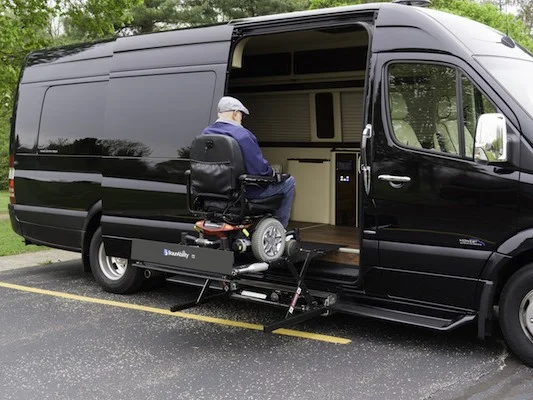
- A mobility-equipped van with a powered lift, secured wheelchair positions, and accessible interior dimensions, like the Auto Elite Mobility Sprinter.
Buying, Ownership & Business Use
- MSRP
- Manufacturer's Suggested Retail Price. For conversions, the completed vehicle's price reflects both the chassis and the coachwork.
- Chassis Warranty
- The original manufacturer's warranty covering the engine, drivetrain, and factory systems, honored at Mercedes-Benz, Ford, or Ram dealers nationwide.
- Conversion (Upfit) Warranty
- The coachbuilder's coverage of the systems and craftsmanship it added. Always ask any builder what is covered, for how long, and how claims are handled.
- Section 179 Deduction
- A federal tax provision letting qualifying businesses deduct a substantial portion of a work vehicle's cost in the year it enters service; many executive van buyers qualify. Learn more on our tax savings page and consult your tax professional.
- Bonus Depreciation
- An additional accelerated depreciation allowance that can stack with Section 179 for business vehicles. Rules change year to year - verify current limits with your accountant.
- Business Use Percentage
- The share of a vehicle's mileage used for business, which determines how much of its cost is deductible. Documentation matters.
- Livery
- Operating a vehicle for hire with a driver - executive shuttles, hotel transfers, tour services. Livery use has its own insurance and licensing requirements. Auto Elite's executive shuttles and 15 Passenger Coach are built for this work.
- Lead Time
- The time from signed purchase order to completed vehicle. Custom builds are scheduled into production slots; spec builds in inventory can deliver quickly.
- Purchase Order & Deposit
- The signed agreement specifying your build and price; a deposit typically reserves your production slot before construction begins.
- Factory Pickup
- Taking delivery at the builder's facility - at Auto Elite, that means a walkthrough of your van where it was crafted in Elkhart, Indiana.
- White-Glove Delivery
- Having the finished van delivered to your door - by transport carrier or a professional driver - with a full orientation, available anywhere in the USA.
- Trade-In
- Applying your current vehicle's value toward a conversion purchase. Contact our team to discuss options.
- RV Financing
- Loans structured for motorhomes and conversion vans, often with longer terms than auto loans. Start with our financing application.
- Title & Registration Class
- Depending on the build and your state, a conversion may title as a passenger van or a motorhome, which affects registration, insurance, and sometimes taxes. Your state DMV has the final word.
- Resale Value
- Professionally built conversions from established coachbuilders hold value better than DIY builds, thanks to documented systems, safety-compliant seating, and brand reputation.
Questions? Read the FAQsBrowse Inventory →