


Travel planning
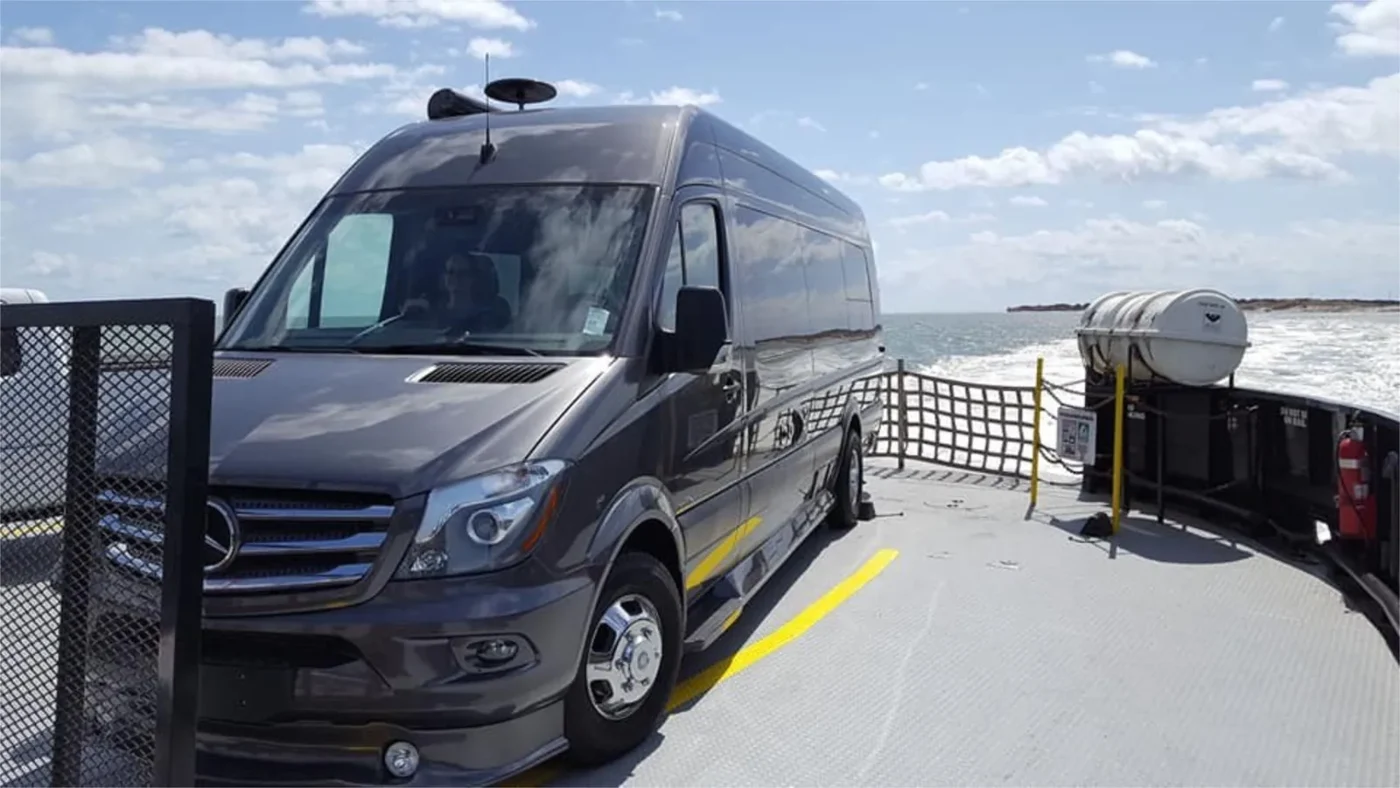
A ferry can make a Sprinter trip more interesting, but a reservation made for an ordinary car may not describe your completed van. Before choosing a sailing, collect its actual travel dimensions, check the operator’s vehicle categories and plan both directions of the crossing. The important details are the ones that affect boarding and the day’s schedule.
Washington State Ferries provides a useful example because it distinguishes vehicle reservations from tickets and asks for vehicle length and height. Other ferry operators have their own rules. Use this guide as a preparation list, then confirm the requirements for the route and sailing you intend to take.
Measure the van as it will travel
Write down overall length and height with the equipment that will be fitted for the trip. Include items that change the vehicle’s envelope, such as a rear carrier or rooftop equipment. Do not substitute wheelbase for overall length. If you have only a brochure dimension, ask the builder or seller to confirm what it includes and arrange a safe measurement of the completed vehicle.
Keep the figures in both feet/inches and metric units if your itinerary crosses borders. Save them with a recent exterior photograph and the vehicle registration. This is a convenient reference when a booking agent asks about the van; it is not a substitute for the operator deciding which category applies.
Separate the reservation from the fare
On Washington State Ferries’ reservation page, reservations are offered for Port Townsend/Coupeville and Anacortes/San Juan Islands routes. A reservation is not the ticket, and reservations are generally one-way. Check the particular departure: eastbound travel from Shaw or Lopez to Anacortes has no vehicle reservations.
The booking process asks for length and height. Enter your actual dimensions rather than selecting a smaller category because it shows availability. For Anacortes/San Juan Islands, the published release pattern treats tall, non-standard vehicle spaces differently from standard spaces; do not assume later standard-space releases will solve a tall-vehicle booking.
Save the confirmation number and the fare receipt separately. For a return trip, write out the departure terminal, destination, date and sailing time for each direction. That simple check catches the easy mistake of arranging an outbound trip and treating the return as automatic.
Build the terminal visit into the day
Read the current check-in instructions before setting your departure time. Washington State Ferries publishes different arrival windows for its reservable routes and warns that a queue can delay reaching the tollbooth. Recheck its page when booking and again before travel. Reaching the terminal area is not necessarily the same as completing check-in.
Choose a suitable fuel and restroom stop before joining the terminal queue. Keep the booking information accessible to the driver or front passenger, with an offline copy in case mobile service is poor. Avoid scheduling a tightly timed activity immediately after the advertised arrival; leave room to unload and find your way out of the terminal.
Ask equipment questions before boarding
Review the operator’s rules for everything you are carrying. Washington State Ferries maintains a what-you-can-bring-aboard page, including propane requirements. If your conversion has fuel-burning equipment, ask the operator how it must be secured or shut down and confirm the procedure in your equipment manual. Do not assume a rule for a different ferry company applies.
Ask about passenger access to the vehicle deck, accessibility needs and any arrangements that require advance notice. Gather the items you may need during the crossing before boarding instructions begin. For a van with refrigeration, plan food storage around any required equipment shutdown rather than assuming the appliance can run throughout the trip.
Prepare for the ramp and crew directions
Tell terminal staff about a low rear carrier, unusual overhang or other clearance concern before you are directed onto a ramp. Ask for guidance if you cannot judge the space. Follow the crew’s boarding and parking instructions; another Sprinter making the crossing does not prove that your equipment or route has the same clearances.
Before entering the loading lane, secure loose cabin items, latch cabinets and put passengers in their designated travel seats. Keep the driver’s attention on the loading operation. Save photos and sightseeing for a point when you are safely parked and the crew permits it. The photograph above shows a Sprinter on a ferry, but does not identify a Washington route.
Keep a workable alternative
Check the operator’s current service alerts and schedules before leaving. Know which booking changes or cancellations require action, and keep the operator’s contact details with the reservation. A later sailing, a different day or a road alternative may affect lodging and meal plans as well as the crossing.
For a first ferry trip, a flexible day is easier to manage than a chain of fixed appointments. Finish your plan with a place to stop after arrival and a realistic return arrangement. If you are still comparing vans, bring the intended ferry route and your equipment plans to the viewing so the dimensions you record are useful beyond the showroom.
Sources checked October 15, 2026. Recheck current travel conditions and the equipment, labels and manuals for your specific completed vehicle.