










Buying & ownership
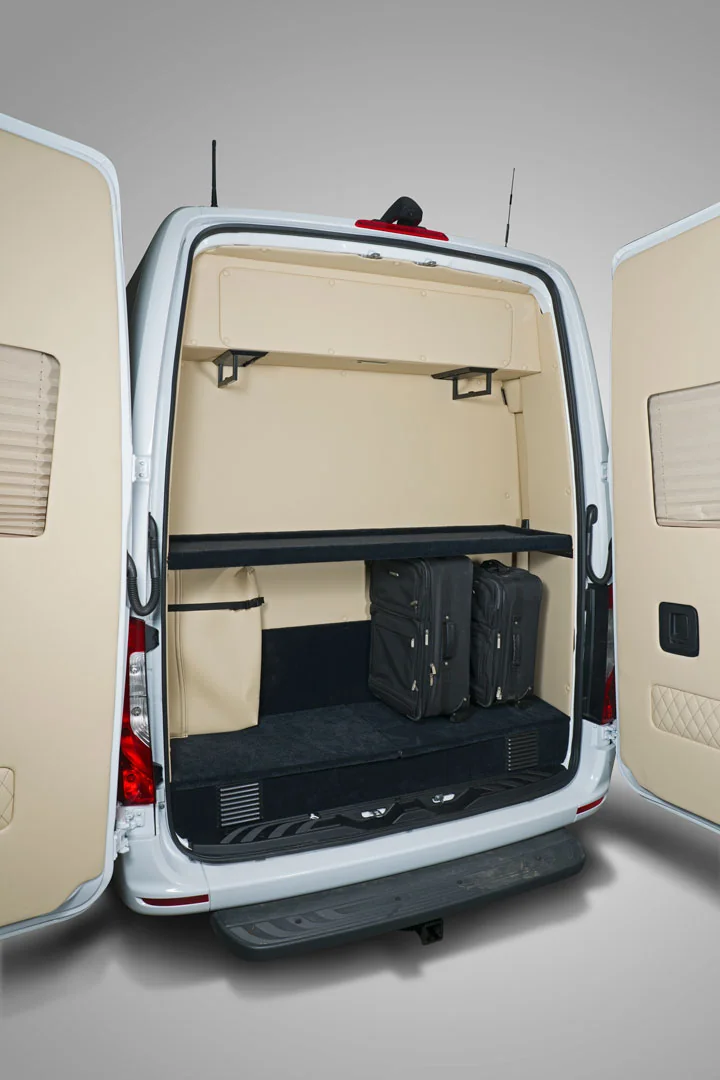
A luggage bay can have room for another suitcase even when the van has reached a weight limit. Before planning a full passenger load, check what your finished Sprinter can carry—not the advertised payload of an empty cargo van.
Start with the finished conversion
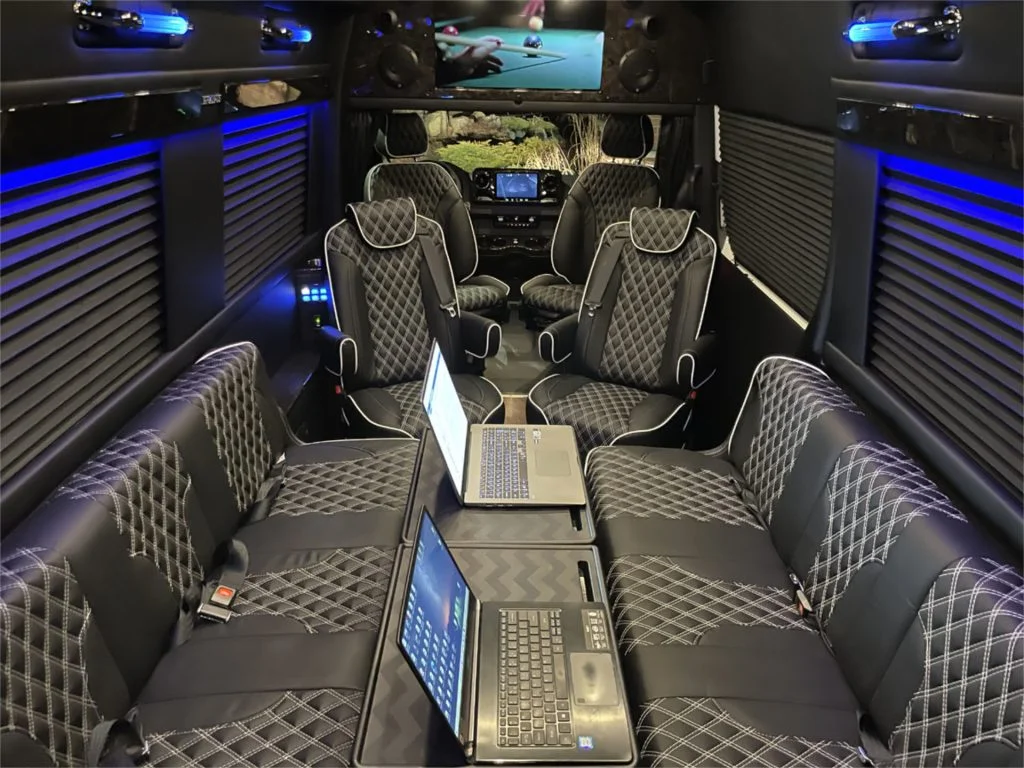
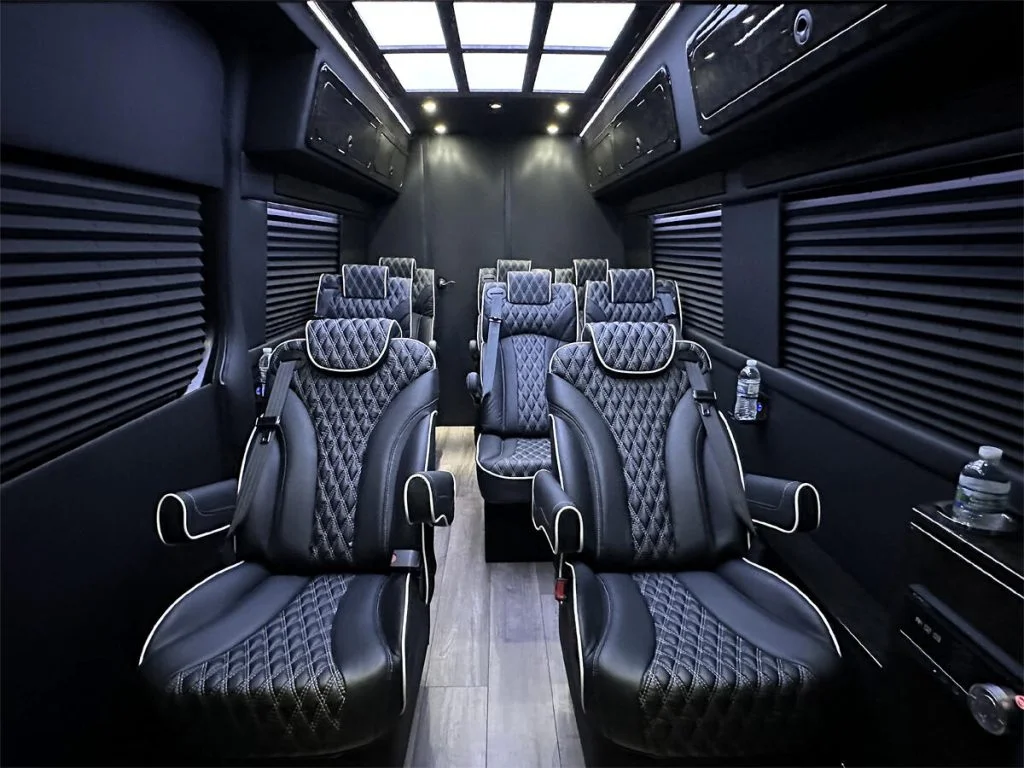
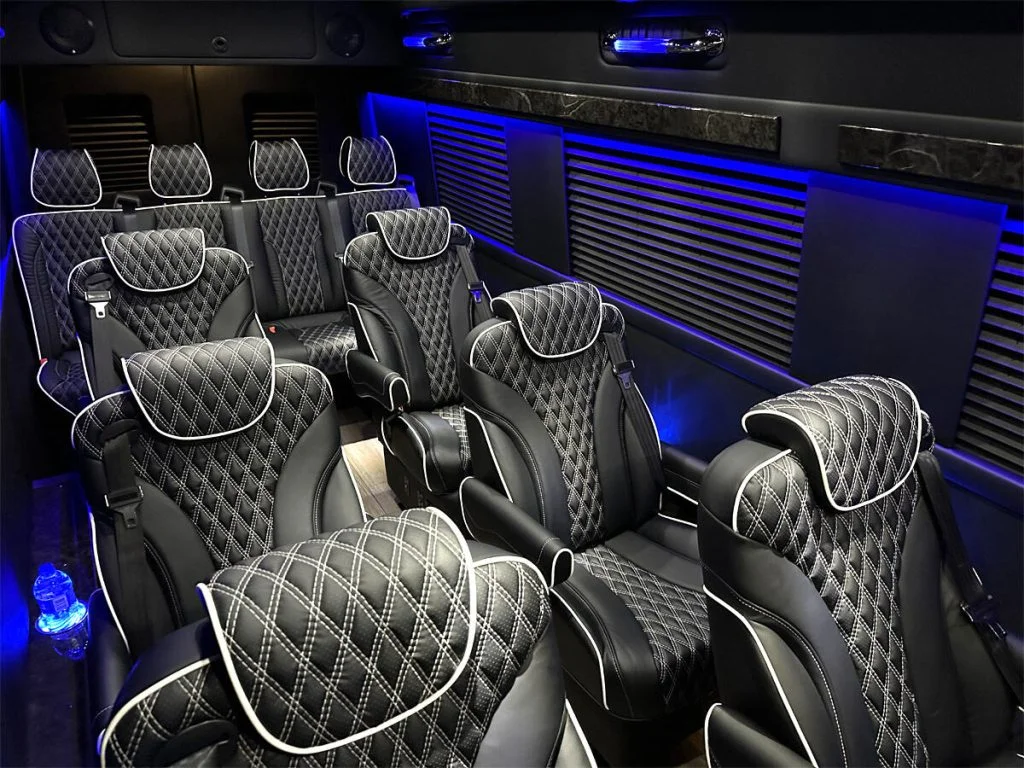
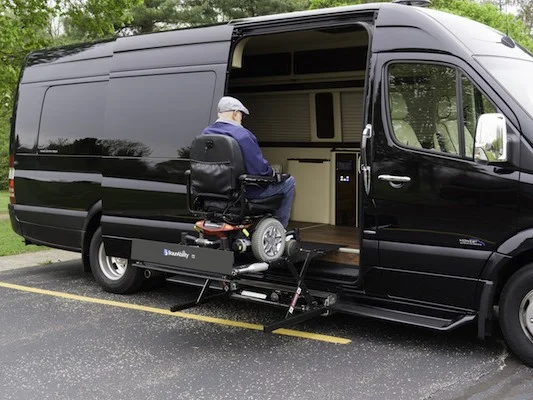
Cabinets, seats, batteries, a bathroom and entertainment equipment all become part of the vehicle you drive. A specification for the original chassis does not tell you how much capacity remains after that equipment is installed. Ask for the completed vehicle’s weight and the loading information that applies to its current configuration.
Photograph the vehicle certification and loading labels. Record the gross vehicle weight rating (GVWR), each gross axle weight rating (GAWR), tire information and any converter-supplied loading label. If the paperwork and labels appear inconsistent, have the converter or a qualified Sprinter specialist reconcile them before deciding how much to carry.
NHTSA describes GVWR as the manufacturer’s specified loaded vehicle weight. It is a limit, not a scale reading. A scale tells you what your particular van weighs today.
Make a trip-specific load list
Write down everyone traveling, including the driver, then list the things that will actually be aboard. Use realistic weights rather than assuming every suitcase or passenger is the same. For a golf trip, the clubs matter as much as the overnight bags; for a family weekend, remember the stroller, cooler and supplies stored under the seats.
- Passengers, pets and their travel equipment.
- Suitcases, golf bags, outdoor gear and food.
- Fresh water and any contents remaining in waste tanks.
- Loose accessories added since the vehicle was last weighed.
- A rear carrier and its load, if fitted and approved for the vehicle.
Keep the list alongside the weight ticket. Record fuel and tank levels and whether people were inside during weighing. Otherwise, the same load can accidentally get counted twice—or missed entirely.
Use a scale, then check the axles
Arrange a weighing that reports front and rear axle loads as well as the total. Follow the scale operator’s directions. Ideally, weigh the van in the configuration you intend to drive, with the passengers, luggage and fluids accounted for. Do not assume a total below GVWR proves that each axle is also within its rating.
The Mercedes-Benz manual for your model year is the starting point for vehicle loading instructions. The completed conversion may have additional restrictions. Ask the builder how luggage is meant to be secured and which storage compartments have their own load limits. An attractive shelf is not necessarily designed to hold heavy cases.
Illustrative example only: if a completed van has a 10,000-pound GVWR and weighs 8,900 pounds with fuel, installed equipment and planned water aboard, 1,100 pounds remain under that total-weight limit. Four travelers totaling 700 pounds and 250 pounds of bags leave 150 pounds—not an allowance to ignore axle, tire or compartment limits. These are invented numbers, not specifications for an AutoElite model.
Check tires without guessing at pressure
Use the applicable vehicle information and manufacturer guidance for tire size, load rating and cold inflation pressure. Do not use the tire sidewall’s maximum pressure as a universal setting for your van. NHTSA’s tire guidance explains where to find the vehicle’s recommended pressure and why regular checks matter. A tire-pressure warning system does not replace checking the tires yourself.
If wheels or tires have been changed, have a qualified shop confirm that the replacements suit the completed vehicle. Carry the weight ticket and label photos to that conversation; they are more useful than saying the van “usually has four people in it.”
Ask these questions before choosing a layout
When comparing vans, send the seller your passenger count and normal luggage list. Ask: What does this completed van weigh? What was aboard when it was weighed? What are its axle limits? Where should the heaviest bags go? Can the usual load fit in the designated storage without blocking exits or equipment access?
For towing, request a separate review of the completed vehicle, hitch, trailer and applicable limits. Do not treat unused cabin space or a chassis brochure’s headline tow figure as approval. For an ordinary passenger trip, a documented loading plan and a current weight ticket make the decision much clearer.
Sources checked September 24, 2026. Confirm the equipment, labels and manuals for your specific completed vehicle.