Travel planning
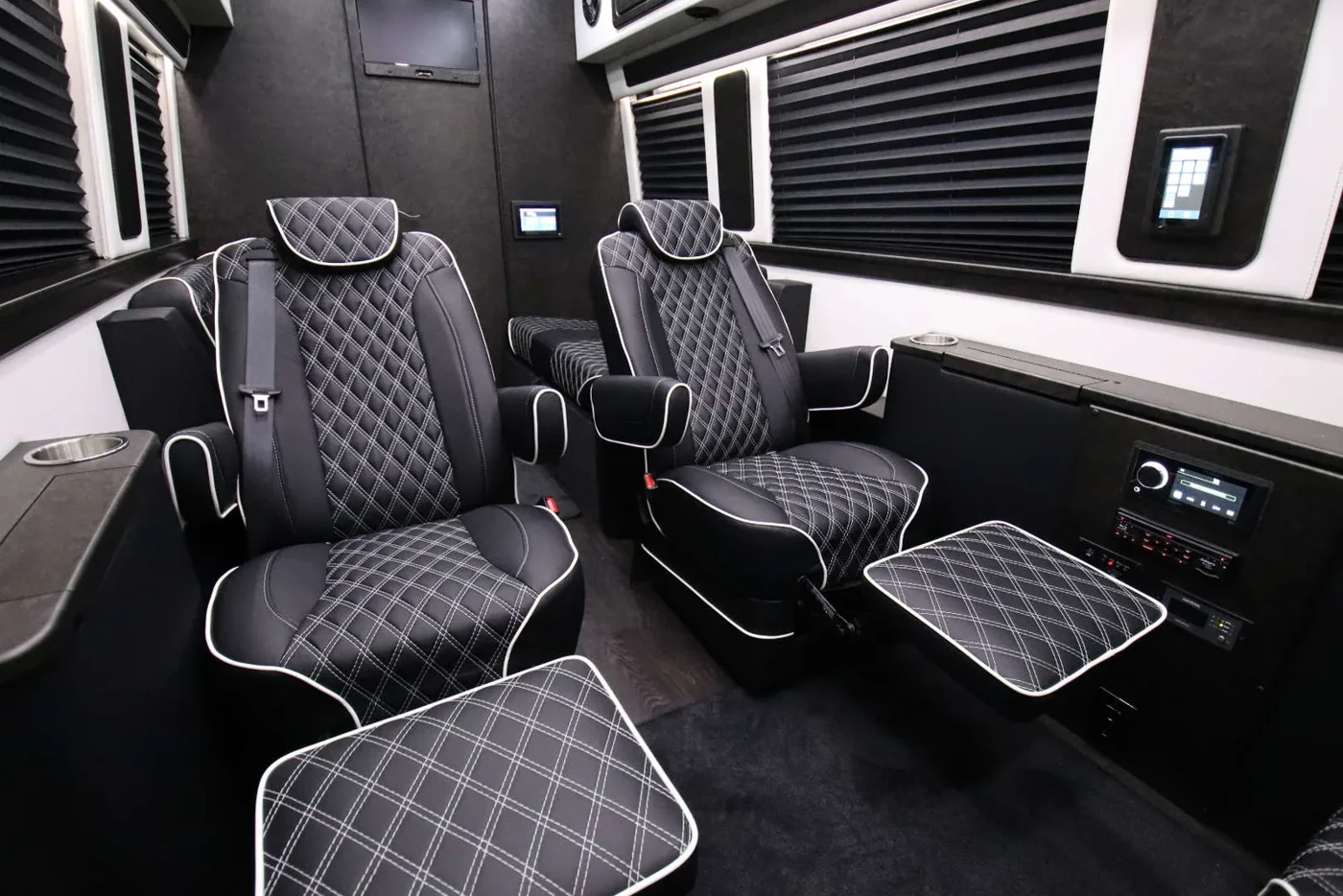
A spacious Sprinter can make traveling with a dog or cat more comfortable, but the floor plan needs to work while the vehicle is moving and while everyone is stopped. Plan the pet’s secured travel position first, then arrange the bed, food, walking gear and itinerary around it.
Choose a travel position before choosing a pet bed
A soft lounge seat or a large rear bed is not a pet restraint. Start with an appropriately sized carrier, crate or harness system and its installation requirements. The Center for Pet Safety’s certified-product directory provides a place to research independently tested products. Check the exact product and size, and read its current instructions rather than relying on a generic “crash tested” label.
Then ask the conversion manufacturer whether that installation can be accommodated in the finished van. Do not assume a cabinet handle, loose table base or convenient floor fitting is an approved anchorage. A product’s test results do not establish that an improvised installation in your Sprinter is suitable. Resolve the attachment method before the first journey.
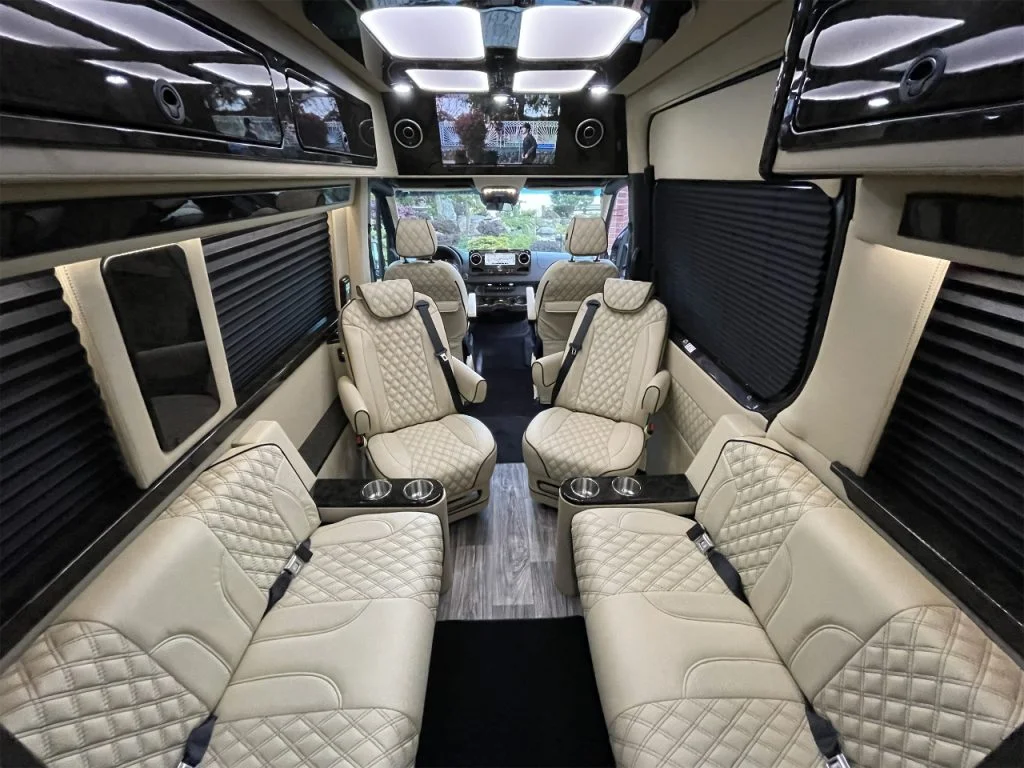
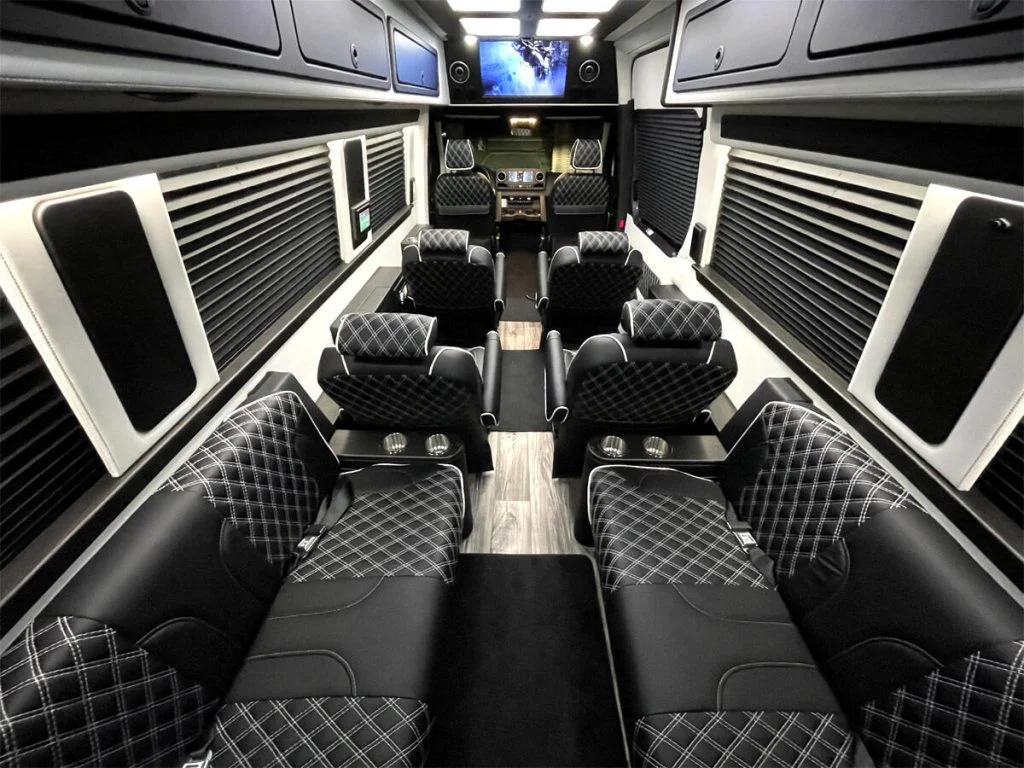
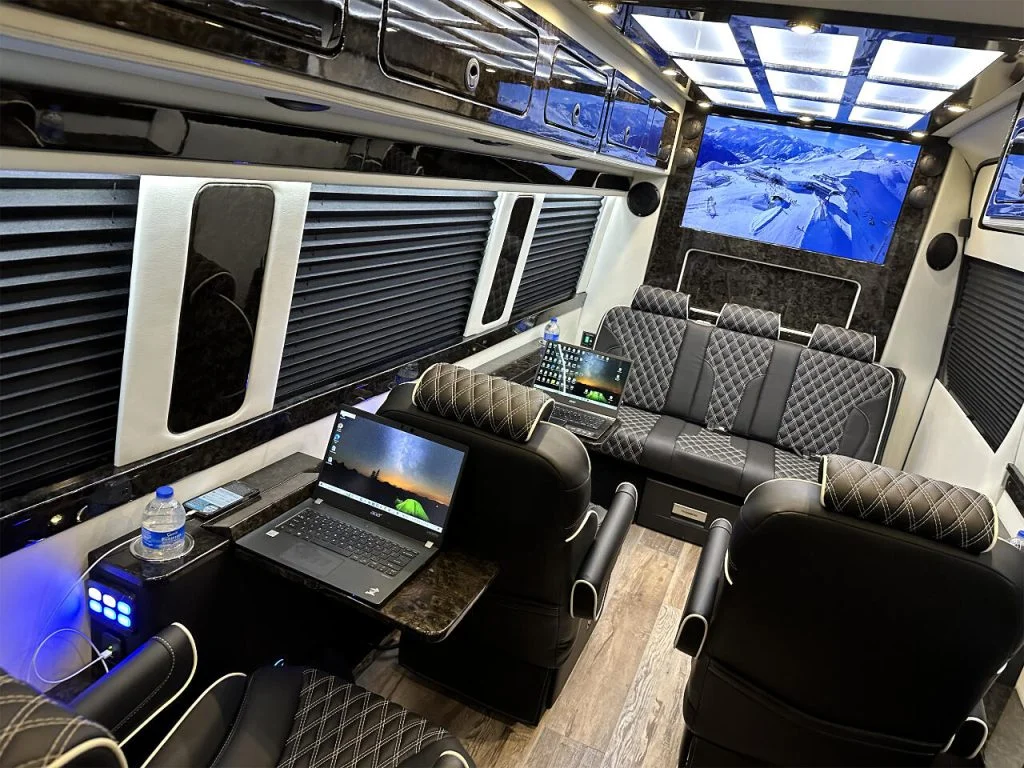
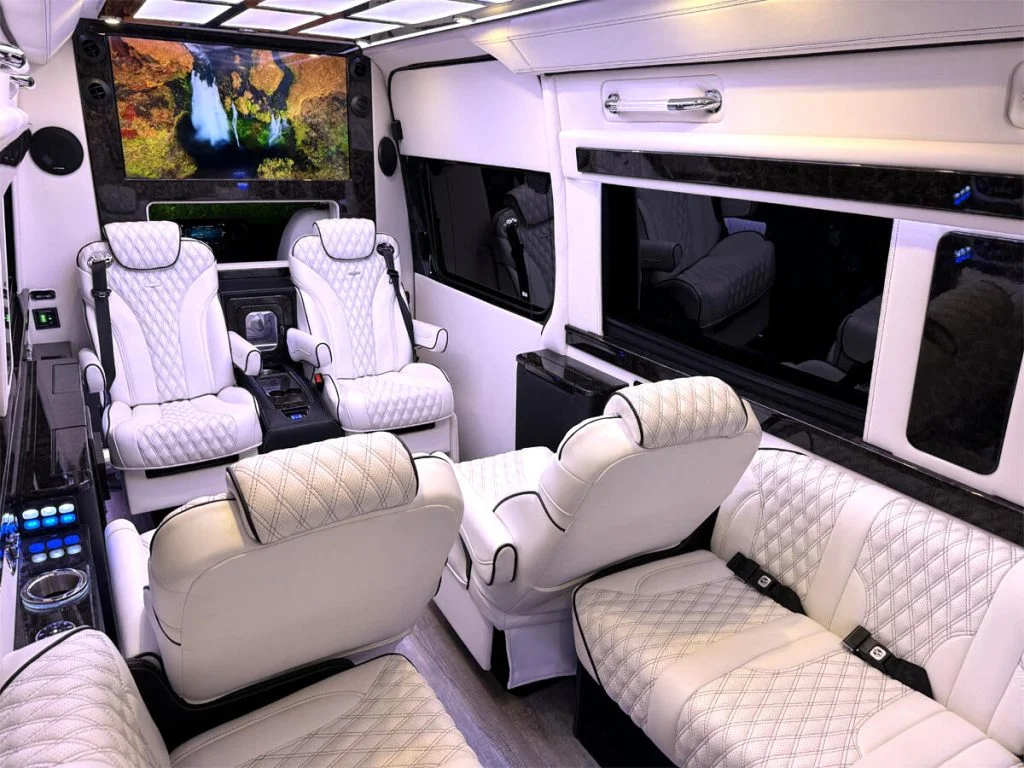
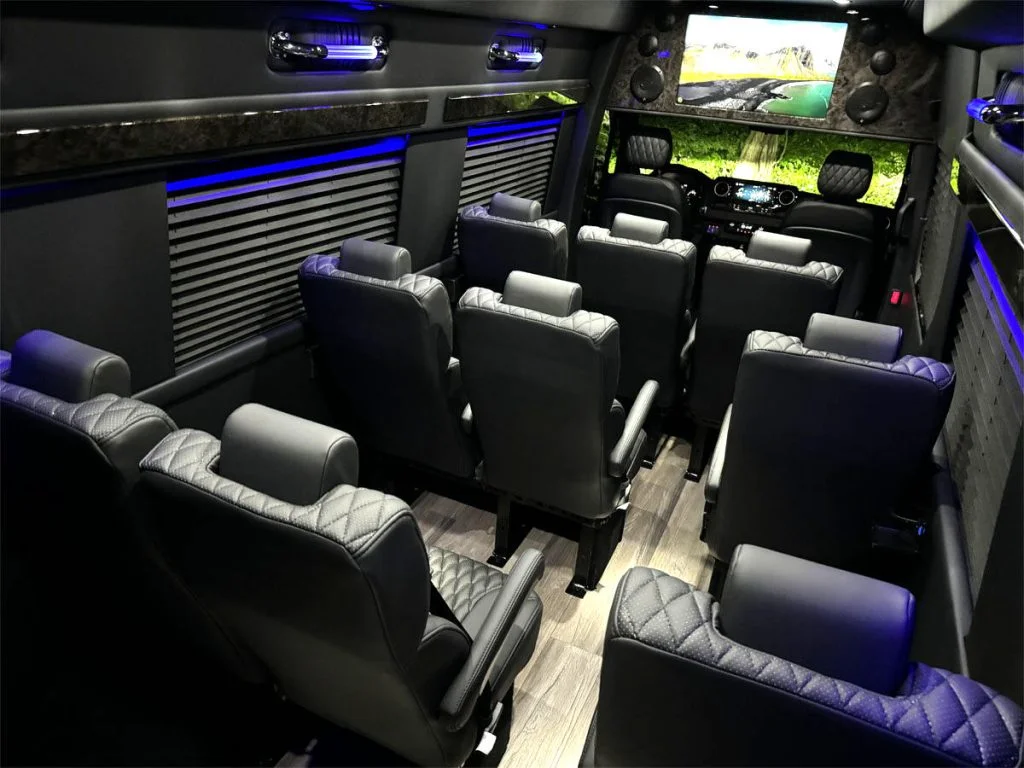
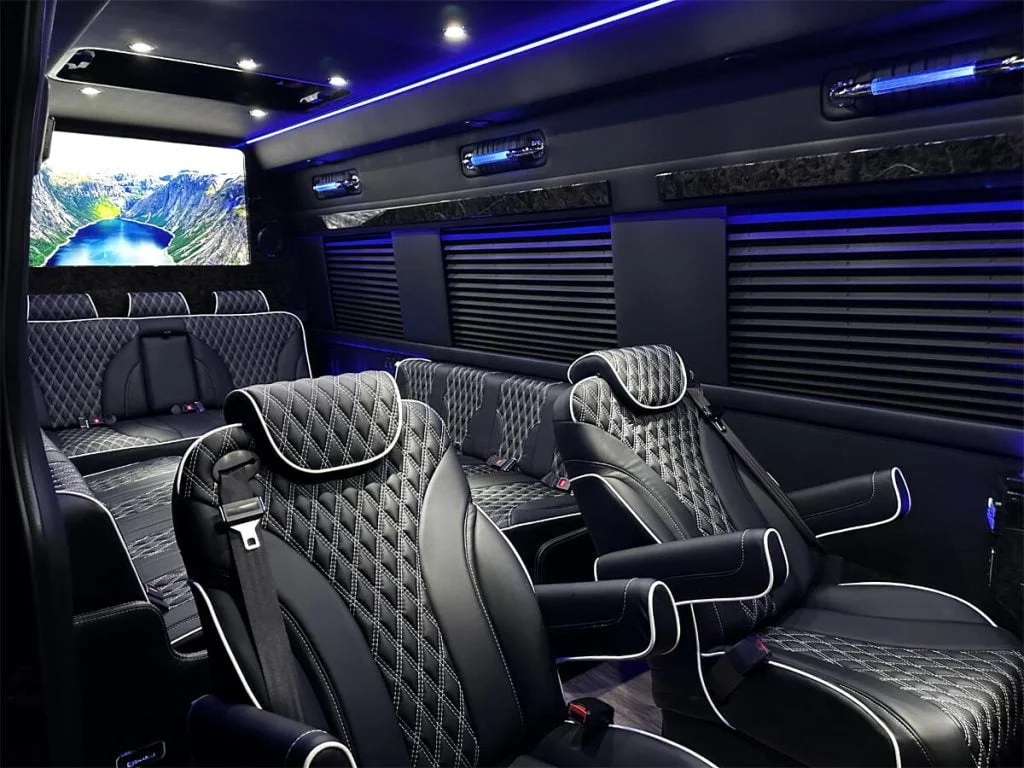
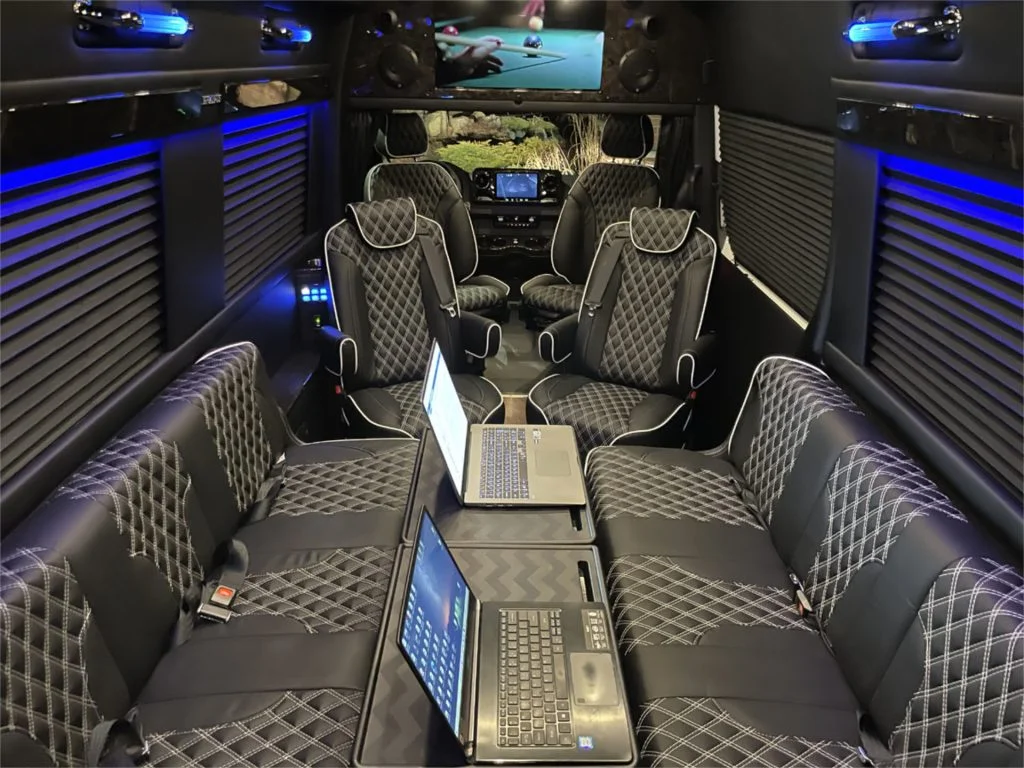
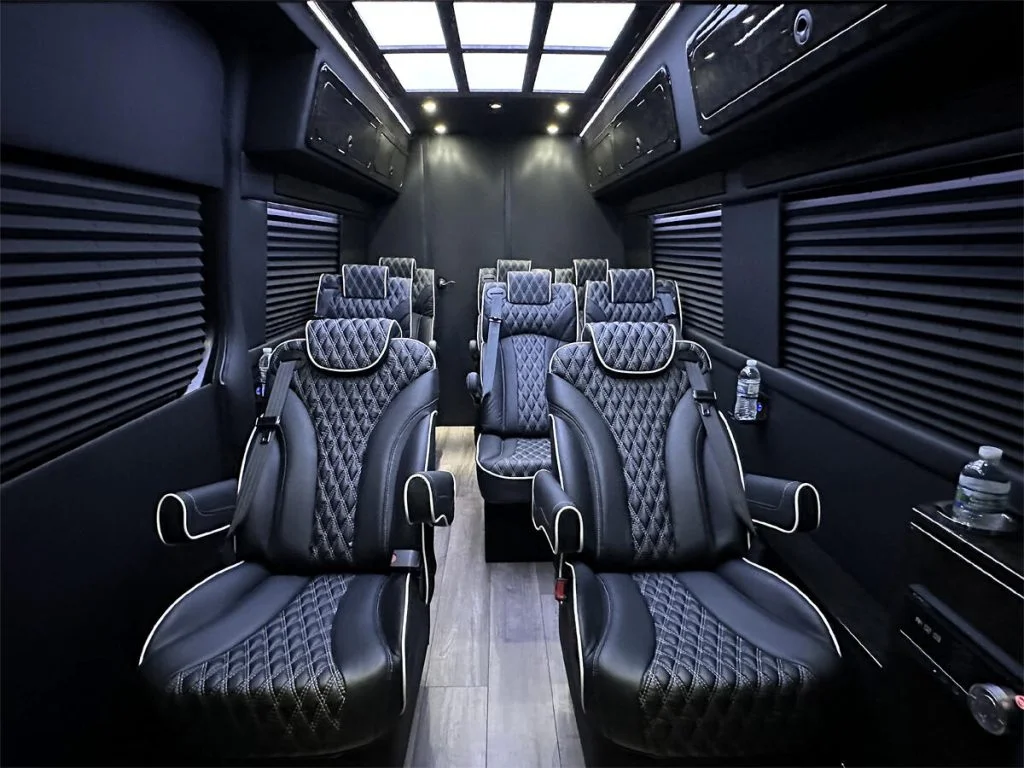
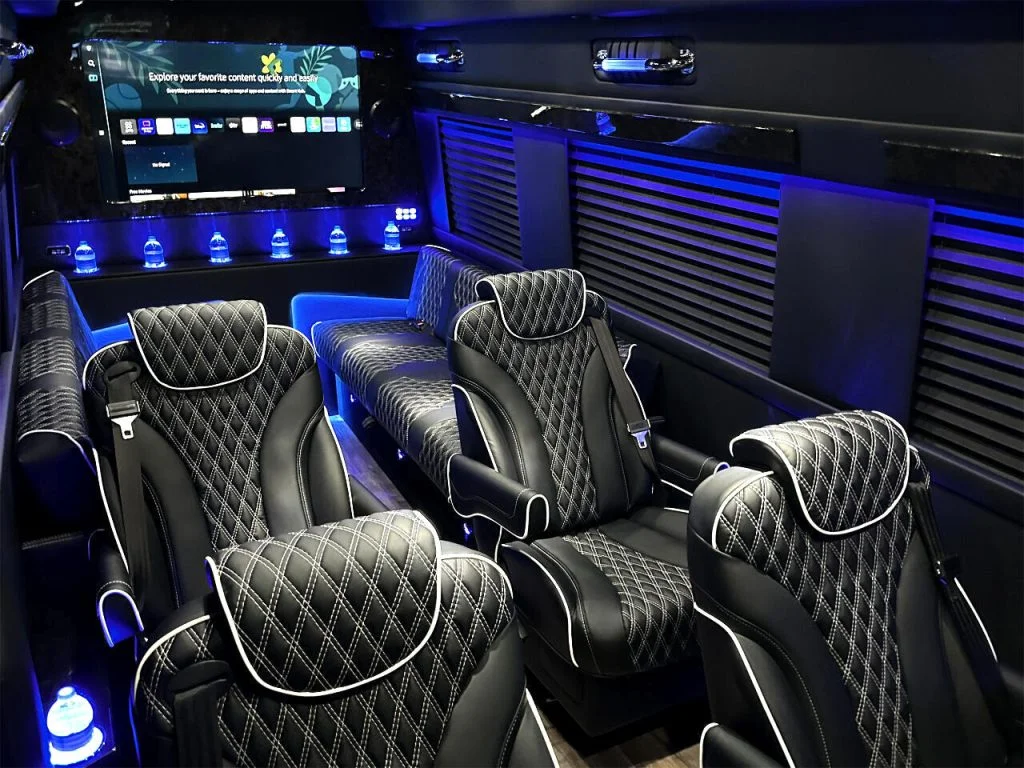
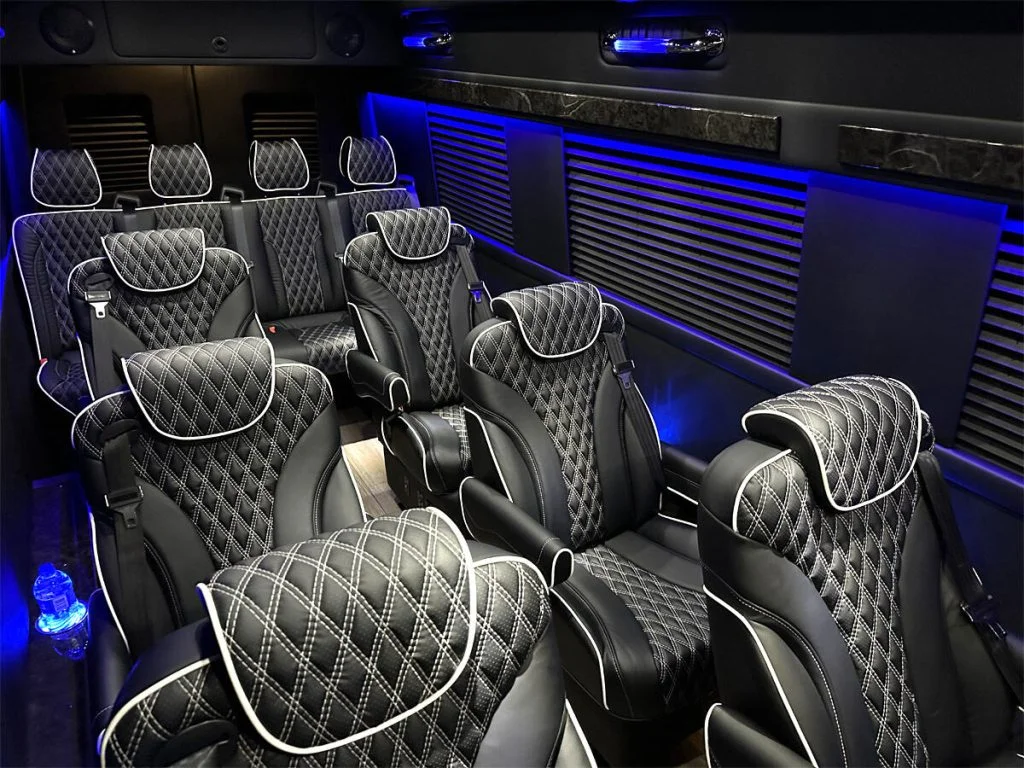
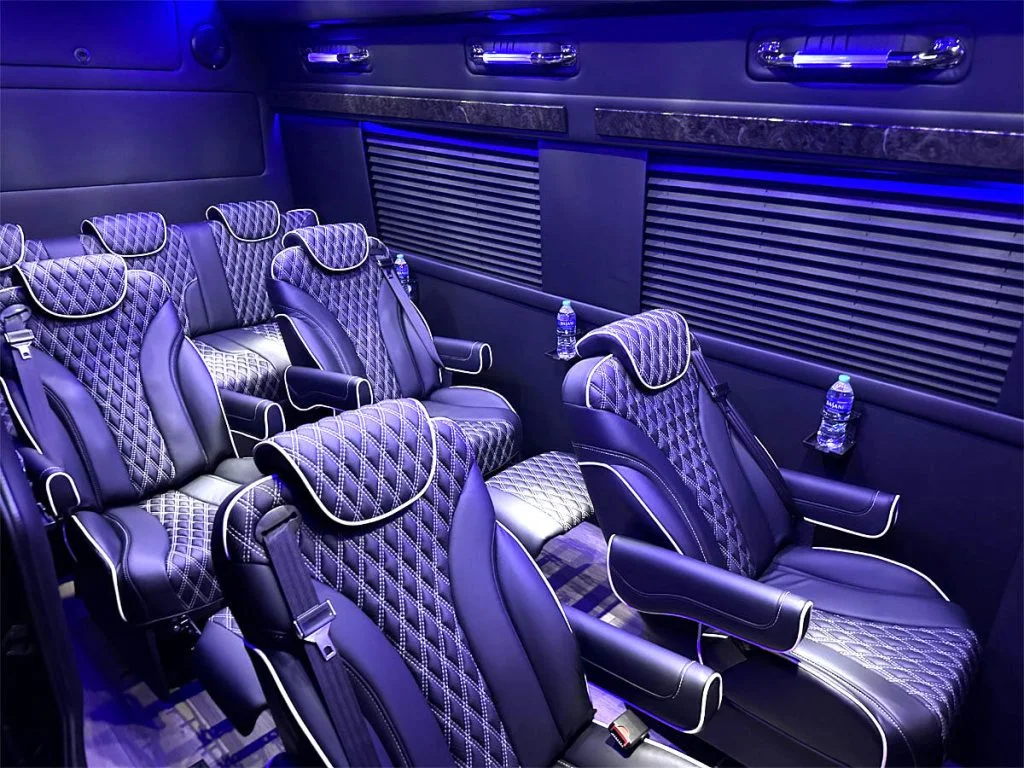
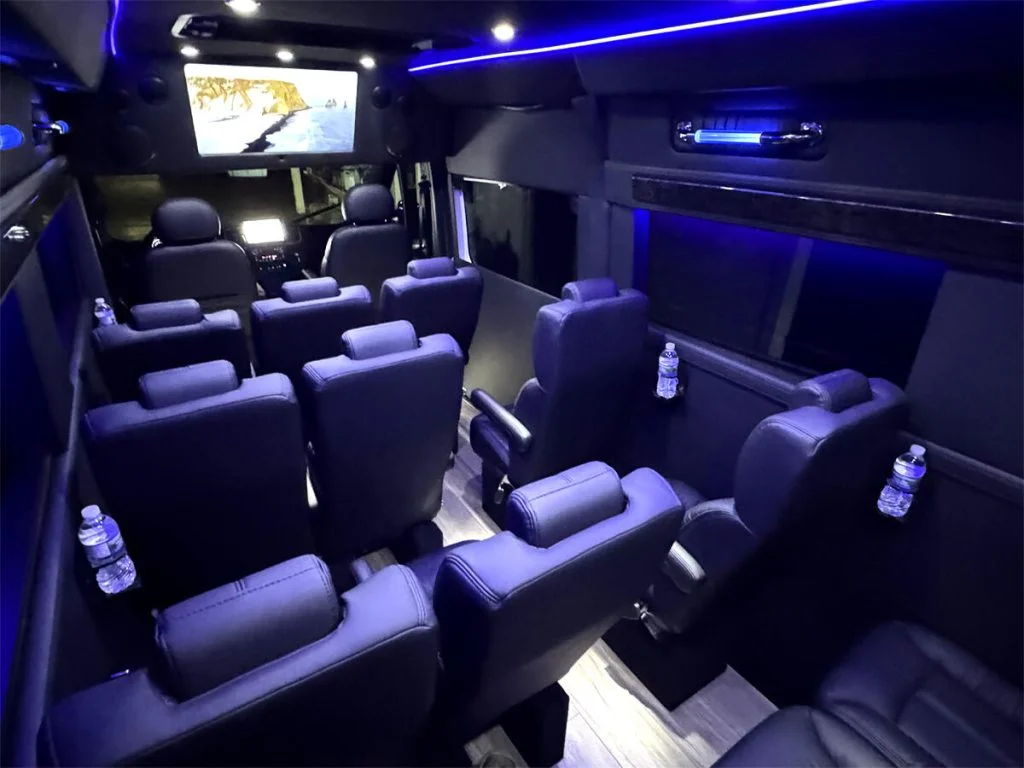
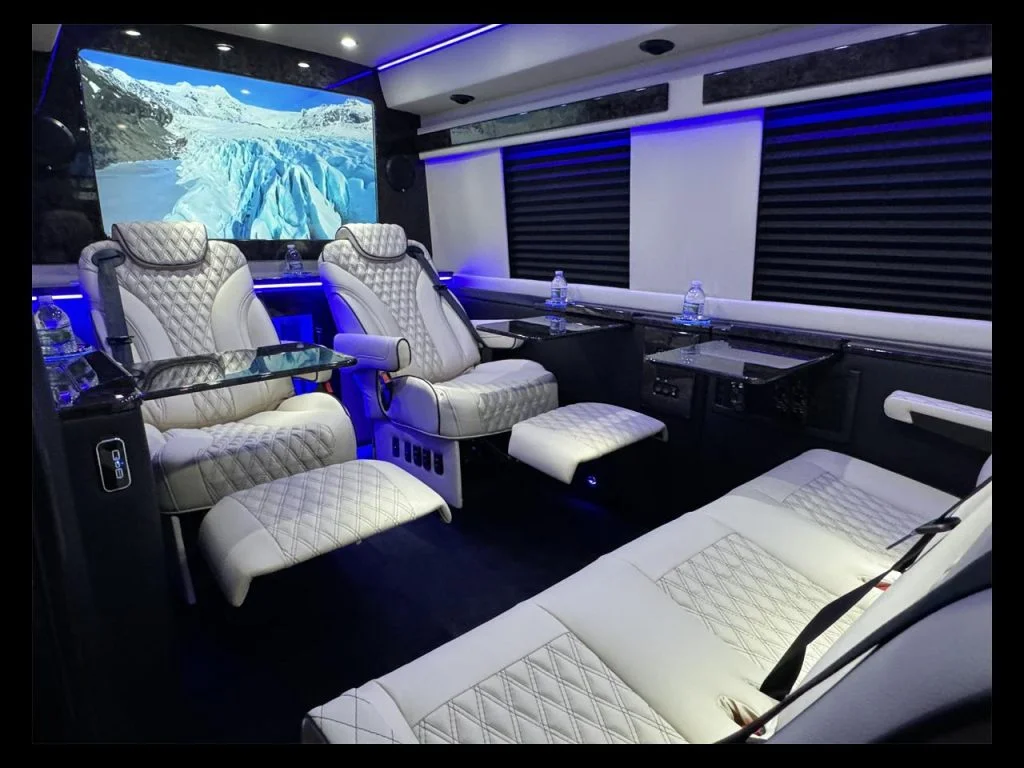
Measure the proposed travel space with the human passengers’ seats in their permitted travel positions. Keep access to exits and required equipment clear. Bring the carrier dimensions to a viewing, including room needed to open its door. A layout that looks generous in photographs may have much less usable floor space once chairs, luggage and a carrier are in place.
Walk through a normal stop
Imagine arriving at a busy rest area with rain starting. Where is the leash? Can one person reach it without moving suitcases? Can the pet be secured before the sliding door opens? Choose an accessible storage spot for walking equipment and use the same place every time. Agree who handles the pet and who checks the surroundings.
Bring towels, waste bags, the usual food, drinking water, bowls and cleaning supplies appropriate for the cabin materials. Pack these separately from items you will not need until the overnight stop. The interior-care guide can help you avoid using an unsuitable cleaner on upholstery or trim after a muddy walk.
At home, rehearse getting in, settling in the travel position and getting out while the van is parked. Follow with a short local outing before a long travel day. Use that trial to find practical problems: an awkward carrier door, supplies out of reach or a pet that needs a different travel plan. Ask your veterinarian about individual health or travel concerns.
Plan stops around supervision
Do not make leaving a pet alone in the parked van the solution to a restaurant visit or a restricted attraction. Cabin air conditioning, batteries, campground electricity and remote temperature alerts can all fail or stop working as expected. Plan activities where the pet can accompany you or where a person can stay with it in suitable conditions.
For a couple traveling together, that may mean taking turns visiting a museum. For a solo traveler, it may mean choosing another attraction or arranging appropriate care in advance. Put the decision into the itinerary before you arrive. A meal stop with outdoor seating is only useful if that business welcomes pets and the weather is suitable.
Keep veterinary contact details and the information your veterinarian recommends available offline. Check that identification and contact information are current. Build rest opportunities into the driving day instead of scheduling every hour around the destination. The right frequency and duration depend on the animal; use the local trial and veterinary advice to plan realistically.
Check each destination’s actual pet rules
“Pet friendly” can mean permission at a campsite without permission on the nearby trail, beach or shuttle. The National Park Service pet-planning page directs visitors to individual parks and their rules. Read the page for the place you will visit, then check current alerts. Do not carry one park’s permissions over to the next.
For a campground, confirm pet limits, leash rules and any restrictions relevant to your reservation directly with the operator. Ask about the walking route from your particular site. A space near a road or without an easy place for a short walk may be inconvenient even when pets are allowed. Save those details beside the booking confirmation.
Test the overnight layout with everything inside
Once parked, set up the human sleeping space, pet resting area and necessary supplies together. Check that you can reach the bathroom and exit without stepping over a sleeping animal or moving a heavy carrier. Store food and cleaning products securely, and check the completed layout again before changing back to travel mode.
If you are comparing vans, bring this routine to the appointment. Ask to demonstrate the seating and sleeping configuration with your carrier measurements. A workable pet plan comes from usable space, a suitable restraint installation and realistic stops—not from the largest-looking lounge.
Sources checked October 8, 2026. Recheck current travel conditions and the equipment, labels and manuals for your specific completed vehicle.